In brief
At a glance
Quick Facts
- Origin
- The term emerged from North American labor unions in the 1970s, particularly in response to environmental regulations that threatened jobs.
- ILO Guidelines
- The International Labour Organization adopted comprehensive Just Transition guidelines in 2015, providing a global policy framework.
- Paris Agreement
- The 2015 Paris Agreement explicitly references the imperatives of a just transition of the workforce and the creation of decent work.
- Key Pillars
- Social dialogue, social protection, rights at work, and employment are the four pillars of the ILO’s just transition framework.
- Sectors Affected
- Fossil fuel extraction, heavy industry, agriculture, and transportation are among the sectors most impacted by the transition.
- Policy Tools
- Retraining programs, social safety nets, economic diversification, and community investment are common just transition measures.
- Global Recognition
- The concept is endorsed by the United Nations, the European Union, and many national governments as essential for climate action.
Key Takeaways
- A just transition is a framework for making the shift to a sustainable, low-carbon economy fair and inclusive, ensuring that workers, communities, and vulnerable groups are not left behind.
- It originated in the labor movement of the 1970s and has since been adopted by international bodies, governments, and climate agreements as a core principle for climate action.
- The process relies on social dialogue, retraining and reskilling programs, social protection, and economic diversification to manage the social and economic impacts of decarbonization.
- Implementing a just transition is critical to building broad public support for climate policies and avoiding social unrest, while also addressing systemic inequalities.
What Is a Just Transition?
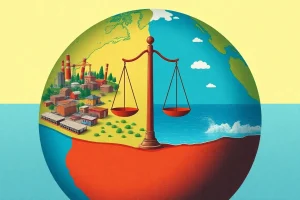
A just transition is a framework and set of principles designed to ensure that the shift toward a sustainable, low-carbon economy is fair and inclusive for all stakeholders, particularly workers, communities, and vulnerable groups who may be negatively affected by the decline of carbon-intensive industries. It seeks to manage the social and economic consequences of environmental policies—such as the phase-out of fossil fuels—by providing support, retraining, and alternative livelihoods, so that the transition does not deepen existing inequalities or create new ones.
The concept bridges environmental sustainability and social justice, recognizing that climate action and economic transformation must go hand in hand with decent work, social protection, and community resilience. A just transition is not a single policy but a process that involves governments, employers, trade unions, and civil society in planning and implementing measures to ensure that the benefits of a green economy are widely shared and that the burdens are not disproportionately borne by already marginalized groups.
Overview
A just transition addresses the human dimension of the shift away from fossil fuels and other environmentally harmful practices. It acknowledges that while the move to a low-carbon economy is necessary to combat climate change, it can also lead to job losses, economic dislocation, and social disruption in regions dependent on carbon-intensive industries. The framework aims to proactively manage these challenges through policies that promote decent work, social inclusion, and economic diversification.
At its core, a just transition is about ensuring that the costs and benefits of the green transition are distributed equitably. This includes providing workers with opportunities for retraining and re-employment in sustainable sectors, supporting communities in diversifying their local economies, and establishing social safety nets for those who cannot immediately find new work. The concept has been embraced by international organizations, national governments, and climate agreements as a necessary component of ambitious climate action.
History
The term “just transition” emerged in the 1970s from the North American labor movement, particularly among trade unions representing workers in industries affected by environmental regulations. Early advocates, such as Tony Mazzocchi of the Oil, Chemical and Atomic Workers Union, argued that workers should not bear the costs of environmental protection and called for a “Superfund for workers” to provide income support and retraining for those displaced by environmental policies.
The concept gained international traction in the 1990s and 2000s through the efforts of the International Trade Union Confederation and the International Labour Organization (ILO). In 2015, the ILO adopted the “Guidelines for a Just Transition towards Environmentally Sustainable Economies and Societies for All,” which provided a comprehensive policy framework. The same year, the Paris Agreement explicitly referenced “the imperatives of a just transition of the workforce and the creation of decent work and quality jobs” in its preamble, cementing the principle in global climate governance.
How It Works
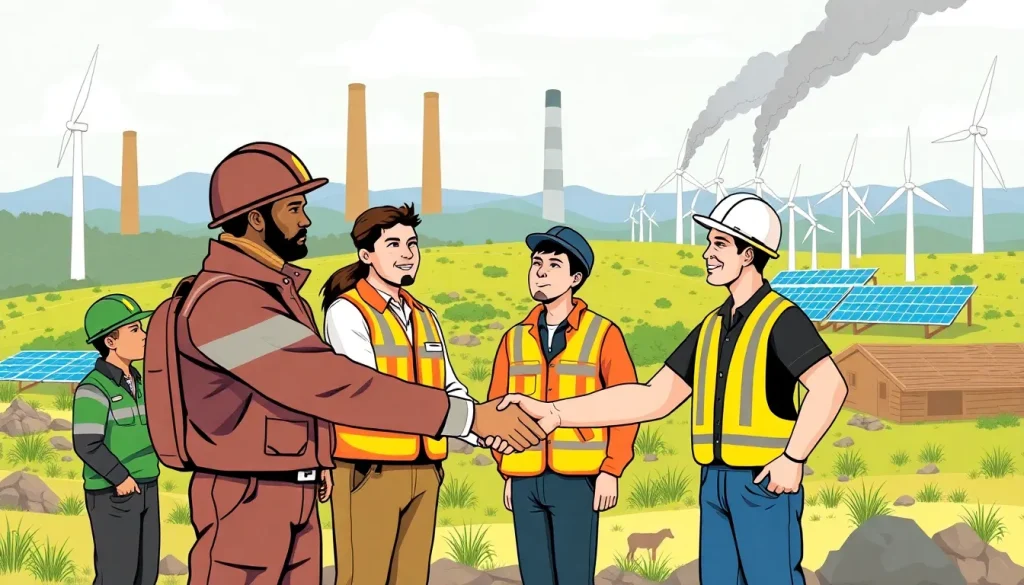
A just transition operates through a combination of policy instruments, social dialogue, and targeted investments. The process typically begins with an assessment of the social and economic impacts of decarbonization policies on specific sectors, regions, and groups. This assessment informs the design of transition plans that are developed through inclusive social dialogue involving governments, employers, workers, and communities.
Key mechanisms include:
- Social dialogue and stakeholder engagement: Formal and informal processes that bring together all affected parties to negotiate and agree on transition strategies.
- Skills development and retraining: Programs that equip workers with the skills needed for jobs in emerging green sectors, such as renewable energy, energy efficiency, and sustainable agriculture.
- Social protection systems: Unemployment benefits, pensions, and other safety nets that support workers and communities during the transition period.
- Economic diversification: Investments in new industries and infrastructure to create alternative employment opportunities in regions dependent on declining sectors.
- Community renewal and place-based policies: Targeted support for local economies, including infrastructure, education, and health services, to build long-term resilience.
Importance and Impact
A just transition is essential for building the political and social consensus needed to implement ambitious climate policies. Without measures to protect affected workers and communities, resistance to decarbonization can stall or reverse progress. For example, the decline of coal mining in many regions has led to economic hardship and social unrest when transition support was inadequate, fueling opposition to climate action.
Beyond mitigating negative impacts, a just transition can generate positive outcomes, including the creation of decent green jobs, reduced inequality, and improved public health. It also aligns with broader sustainable development goals by promoting inclusive growth and social cohesion. When done effectively, it can transform potential losers of the green transition into active participants and beneficiaries, strengthening the overall social contract.
Examples
Several countries and regions have implemented just transition initiatives. In Germany, the Coal Commission brought together government, industry, trade unions, and environmental groups to negotiate a phase-out of coal mining by 2038, accompanied by €40 billion in structural support for affected regions. Spain’s Just Transition Strategy includes agreements with unions and businesses to close coal mines while investing in renewable energy and ecological restoration, providing early retirement and retraining for miners.
At the international level, the European Union’s Just Transition Mechanism, part of the European Green Deal, mobilizes funding to support regions most affected by the transition to a climate-neutral economy. In Canada, the Task Force on Just Transition for Canadian Coal Power Workers and Communities recommended principles and actions to support workers and communities affected by the phase-out of coal-fired electricity. These examples illustrate the growing recognition that climate policy must be paired with social policy to be effective and equitable.
Benefits, Limitations and Trade-offs
The primary benefit of a just transition is that it enables a smoother, more politically feasible shift to a sustainable economy by addressing social concerns upfront. It can reduce inequality, create quality jobs, and foster social cohesion. For businesses, it can provide a stable and predictable environment for investment in green technologies. For governments, it can help maintain public support for climate action.
However, implementing a just transition involves significant challenges and trade-offs. It requires substantial financial resources, long-term planning, and coordination across multiple levels of government and sectors. There may be tensions between the speed of decarbonization and the time needed for retraining and economic restructuring. Additionally, defining who is eligible for support and how to measure success can be contentious. Critics also argue that some just transition policies may be used to delay necessary climate action if not carefully designed. Balancing these trade-offs is a central challenge for policymakers.
FAQ
What is a just transition?
A just transition is a framework that ensures the shift to a sustainable, low-carbon economy is fair and inclusive, protecting workers, communities, and vulnerable groups from negative impacts through social dialogue, retraining, and social protection.
How does a just transition work?
It works by bringing together governments, employers, and workers to plan and implement policies such as skills retraining, economic diversification, and social safety nets, so that those affected by the decline of carbon-intensive industries can find new opportunities.
Why does a just transition matter?
It matters because without it, climate policies can deepen inequality and face strong opposition. A just transition builds public support for climate action, reduces social unrest, and ensures that the benefits of a green economy are shared widely.
References
- International Labour Organization. (2015). Guidelines for a just transition towards environmentally sustainable economies and societies for all.
- United Nations Framework Convention on Climate Change. (2015). Paris Agreement.
- Smith, A. (2017). Just Transition: A Report for the OECD. Organisation for Economic Co-operation and Development.