In brief
At a glance
Quick Facts
- Definition
- Net zero means that any greenhouse gas emissions released into the atmosphere are balanced by an equivalent amount being removed.
- Key Greenhouse Gases
- Carbon dioxide (CO₂) is the primary focus, but net zero targets often include methane, nitrous oxide, and fluorinated gases.
- Global Target
- The Paris Agreement aims to achieve a balance between anthropogenic emissions and removals in the second half of this century.
- Carbon Removal
- Achieving net zero requires both drastic emission reductions and active removal of CO₂ from the atmosphere through nature-based solutions or technology.
- Net Zero vs. Carbon Neutral
- Net zero typically covers all greenhouse gases and implies deeper emission cuts, while carbon neutral often refers only to CO₂ and may rely more on offsets.
- Sectoral Impact
- Energy, industry, transport, and agriculture are the main sectors that must transform to reach net zero.
- Offsetting
- Carbon offsets, such as reforestation or direct air capture, are used to compensate for residual emissions that cannot be eliminated.
- Timeline
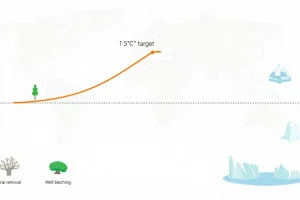
- Many countries have set net zero targets for 2050, but near-term action is critical to limit warming to 1.5°C.
Key Takeaways
- Net zero means that any greenhouse gases released into the atmosphere are balanced by removing an equivalent amount, resulting in no net increase in atmospheric concentrations.
- Achieving net zero requires both drastic reductions in emissions across all sectors and the active removal of carbon dioxide from the atmosphere through natural or technological means.
- The concept is central to international climate goals, particularly the Paris Agreement, which aims to limit global warming to well below 2°C above pre-industrial levels.
- While net zero is a powerful framework, it involves complex trade-offs, measurement challenges, and the risk of over-reliance on future carbon removal instead of immediate emission cuts.
What Is Net Zero?
Net zero is a state in which the total greenhouse gases emitted into the atmosphere are equal to the total greenhouse gases removed from it over a specified period. In practical terms, it means that any residual emissions from human activities—such as burning fossil fuels, industrial processes, or agriculture—are fully offset by processes that extract an equivalent amount of greenhouse gases, primarily carbon dioxide (CO₂), from the air. The goal is to stop adding to the overall stock of greenhouse gases in the atmosphere, thereby halting further human-caused climate change.
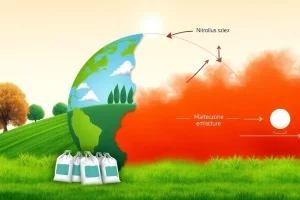
The term is most commonly applied to carbon dioxide, but comprehensive net zero targets encompass all major greenhouse gases, including methane (CH₄), nitrous oxide (N₂O), and fluorinated gases. These gases differ in their warming potential and atmospheric lifetimes, so net zero calculations often convert them into CO₂-equivalent units. Net zero is distinct from “zero emissions,” which would mean no greenhouse gases are released at all—a scenario that is currently unattainable for many essential activities. Instead, net zero acknowledges that some emissions are unavoidable and must be counterbalanced by removals.
How It Works
Reaching net zero involves two complementary strategies: reducing emissions as much as possible and scaling up carbon removal to handle the remainder. Emission reductions target the main sources of greenhouse gases: energy production, transportation, industry, buildings, and agriculture. This is achieved through a transition to renewable energy, electrification, energy efficiency, and changes in land use and industrial processes. The deeper the emission cuts, the less reliance there is on removal methods.
Carbon removal, also called negative emissions, can be nature-based or technology-based. Nature-based solutions include afforestation, reforestation, soil carbon sequestration, and wetland restoration. These leverage the natural carbon cycle to absorb CO₂. Technology-based approaches include direct air capture (DAC), which uses chemical processes to extract CO₂ from ambient air, and bioenergy with carbon capture and storage (BECCS), where biomass is burned for energy and the resulting CO₂ is captured and stored underground. The captured carbon must be stored permanently, for example in geological formations, to ensure it does not re-enter the atmosphere.
To be credible, a net zero plan must specify the scope of emissions covered, the timeline, the balance between reductions and removals, and the governance mechanisms to track progress. Offsetting—paying for emission reductions elsewhere—can play a role, but robust net zero frameworks prioritize direct emission cuts and high-quality, verifiable removals.
History
The concept of balancing emissions and removals has roots in earlier climate policy discussions about stabilization of greenhouse gas concentrations. The term “net zero” gained prominence in the late 2000s and early 2010s as scientific modeling showed that limiting global warming to safe levels would require not only steep emission reductions but also negative emissions later in the century. The Intergovernmental Panel on Climate Change (IPCC) highlighted in its Fifth Assessment Report (2014) that most scenarios consistent with a 2°C target involve net negative emissions by the end of the century.
The Paris Agreement, adopted in 2015, marked a turning point. It set a goal to achieve “a balance between anthropogenic emissions by sources and removals by sinks of greenhouse gases in the second half of this century”—effectively a global net zero target. Following the IPCC’s Special Report on Global Warming of 1.5°C (2018), which underscored the urgency of reaching net zero CO₂ emissions by around 2050, many countries, cities, and corporations began announcing their own net zero pledges. The concept has since become a central organizing principle of climate policy worldwide.
Why It Matters
Net zero is essential because the accumulation of greenhouse gases in the atmosphere is the primary driver of global warming. Every ton of CO₂ emitted adds to the stock, and the climate system responds to the total cumulative emissions, not just the annual flow. To stabilize global temperatures at any level, net emissions must eventually fall to zero. If net emissions remain positive, temperatures will continue to rise, leading to more severe and irreversible climate impacts.
The scientific consensus, as reflected in IPCC reports, indicates that limiting warming to 1.5°C with no or limited overshoot requires global net anthropogenic CO₂ emissions to reach net zero around 2050, alongside deep reductions in other greenhouse gases. Delaying action makes the transition more disruptive and increases the need for unproven large-scale carbon removal. Net zero therefore provides a clear, science-based target that aligns with the long-term temperature goals of the Paris Agreement and serves as a benchmark for policy, investment, and innovation.
Common Misconceptions
One widespread misconception is that net zero means no emissions at all. In reality, it allows for some residual emissions as long as they are fully offset by removals. Another is that planting trees alone can achieve net zero. While afforestation is valuable, it cannot compensate for continued fossil fuel use at current scales; the land requirements would be immense, and forests are vulnerable to fires and disease, which can release stored carbon back into the atmosphere.
There is also confusion between net zero and carbon neutrality. Carbon neutrality often refers to balancing CO₂ emissions alone and can be achieved through offsetting without deep emission cuts. Net zero, as defined by the Science Based Targets initiative and other standards, typically covers all greenhouse gases and requires significant emission reductions before offsetting. Finally, some assume that net zero is a distant goal that does not require immediate action. In fact, credible net zero pathways demand rapid and sustained emission reductions starting now, with interim targets for 2030 and 2040.
Benefits, Limitations and Trade-offs
The primary benefit of pursuing net zero is the avoidance of catastrophic climate change, including extreme weather, sea-level rise, and ecosystem collapse. The transition also brings co-benefits such as improved air quality, energy security, and new economic opportunities in clean technologies. A net zero economy can be more resilient and equitable if designed with social justice in mind.
However, there are significant limitations and trade-offs. Carbon removal technologies are still in early stages, expensive, and energy-intensive. Large-scale deployment of BECCS or afforestation could compete with food production and biodiversity conservation. There is also a moral hazard: the promise of future removals might delay necessary emission cuts today. Furthermore, measuring and verifying removals is complex, and the permanence of stored carbon is not always guaranteed. Achieving net zero requires overcoming political, economic, and behavioral barriers, and the costs and benefits are unevenly distributed across regions and communities.
What Businesses and Governments Can Do
Governments play a crucial role by setting legally binding net zero targets, implementing policies such as carbon pricing, phasing out fossil fuel subsidies, and investing in clean energy infrastructure and research. They can also establish robust monitoring, reporting, and verification systems to ensure that net zero claims are credible and that progress is transparent. International cooperation is essential to align efforts and support developing countries in their transitions.
Businesses can commit to science-based net zero targets that cover their entire value chain (Scope 1, 2, and 3 emissions). This involves improving energy efficiency, switching to renewable energy, redesigning products and supply chains, and investing in carbon removal projects. Transparent reporting and third-party verification help avoid greenwashing. Financial institutions can align their lending and investment portfolios with net zero pathways, while industry coalitions can share best practices and drive innovation. Ultimately, both public and private sectors must work together to create the regulatory and market conditions that make net zero achievable and sustainable.
FAQ
What is net zero?
Net zero is the state where the amount of greenhouse gases emitted into the atmosphere is balanced by the amount removed, resulting in no net increase in atmospheric concentrations.
How does net zero work?
It works by drastically reducing emissions from sources like energy, transport, and industry, and then using carbon removal methods—such as reforestation or direct air capture—to offset any remaining emissions.
Why does net zero matter?
It matters because stabilizing global temperatures requires net emissions to reach zero. Without it, greenhouse gas concentrations will continue to rise, leading to more severe climate change impacts.
References
- IPCC, 2018: Global Warming of 1.5°C. An IPCC Special Report on the impacts of global warming of 1.5°C above pre-industrial levels and related global greenhouse gas emission pathways.
- UNFCCC, 2015: Paris Agreement. Article 4.1.
- IEA, 2021: Net Zero by 2050 – A Roadmap for the Global Energy Sector.