In brief
At a glance
Quick Facts
- Definition
- Primary microplastics are plastic particles intentionally manufactured at a small size or directly released from products, such as tire abrasion and textile fibers.
- Main sources
- Tire wear and synthetic textiles are two of the largest contributors to global primary microplastic pollution.
- Particle size
- Typically less than 5 mm, with many particles in the micrometer range, invisible to the naked eye.
- Tire composition
- Tire particles contain synthetic rubber, carbon black, silica, and chemical additives like PAHs and heavy metals.
- Textile shedding
- A single synthetic garment can release hundreds of thousands of microfibers per wash.
- Environmental presence
- Found in air, water, soil, Arctic ice, deep-sea sediments, and even human blood and placenta.
- Wastewater treatment
- Modern plants can capture over 90% of microfibers, but the remaining fraction still represents billions of particles.
- Persistence
- Microplastics can persist in the environment for decades to centuries, accumulating in food chains.
Key Takeaways
- Primary microplastics are tiny plastic particles directly released into the environment, with tire abrasion and synthetic textile washing being two of the largest sources.
- Tire wear particles are generated by friction between tires and road surfaces, while textile microfibers are shed during the manufacturing, wearing, and laundering of synthetic fabrics.
- These particles are ubiquitous in air, water, and soil, and can carry toxic chemicals, posing risks to wildlife and potentially to human health through ingestion and inhalation.
- Reducing emissions requires a combination of technological innovation, improved product design, better waste management, and policy interventions.
What Is Primary Microplastics From Tires and Textiles?
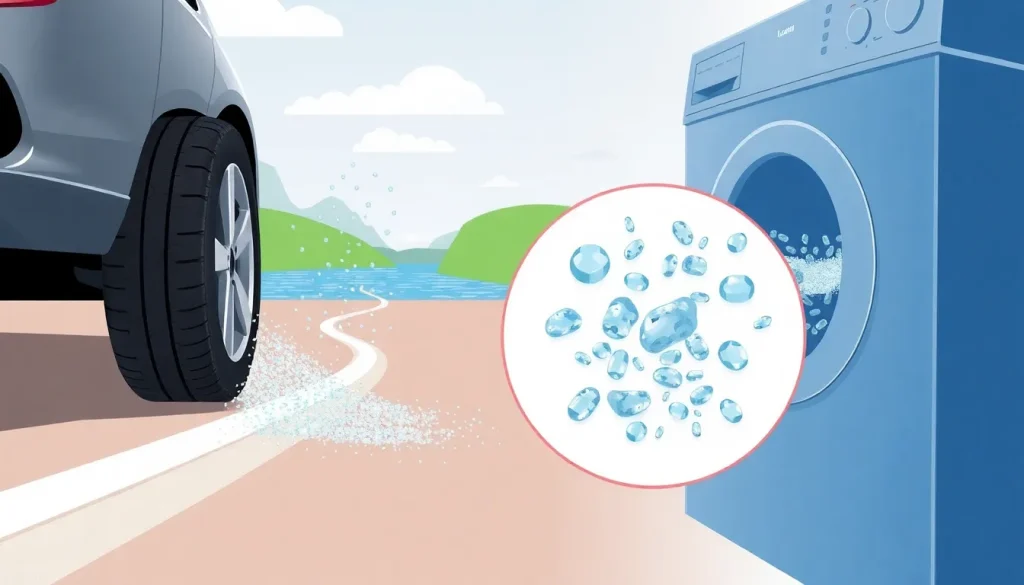
Primary microplastics are plastic particles that are intentionally manufactured at a microscopic size or are directly released into the environment as small particles from the use of plastic-containing products. Unlike secondary microplastics, which form from the fragmentation of larger plastic debris, primary microplastics enter the environment already in a micro-scale form. Two of the most significant sources of primary microplastics are the wear and tear of vehicle tires and the shedding of fibers from synthetic textiles.
Tire wear particles are generated when the tread of a tire is abraded against the road surface during driving. These particles consist of a complex mixture of synthetic rubber, fillers, and additives, and they are released as airborne dust or washed into waterways. Similarly, synthetic textiles such as polyester, nylon, and acrylic shed microscopic fibers during manufacturing, everyday wear, and especially during machine washing. Both tire and textile particles are considered primary microplastics because they enter the environment directly as small particles, rather than resulting from the breakdown of larger items. Their small size, persistence, and widespread distribution make them a global environmental concern.
Overview
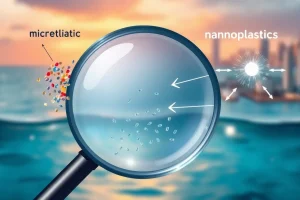
Primary microplastics from tires and textiles are among the largest contributors to global microplastic pollution. Estimates suggest that tire abrasion accounts for a substantial fraction of all primary microplastics released into the world’s oceans, while synthetic textile fibers are often the dominant type of microplastic found in indoor air, wastewater, and even remote environments. These particles are typically less than 5 millimeters in size, with many being microscopic and invisible to the naked eye. Their small size allows them to be easily transported by wind and water, leading to widespread contamination across terrestrial, freshwater, and marine ecosystems.
The release of these particles is an inherent consequence of using the products. Every time a vehicle is driven, tiny fragments of tire material are worn off and deposited on roads. Rain then washes these particles into storm drains, rivers, and eventually the ocean. Similarly, every time a synthetic garment is washed, thousands to millions of microfibers are released into the wastewater. While wastewater treatment plants can capture a significant portion of these fibers, a considerable amount still escapes into the environment. The continuous and diffuse nature of these emissions makes them particularly challenging to control.
How It Works
The generation of tire wear particles is a mechanical process. As a tire rolls, the friction between the rubber and the road surface causes small pieces of the tire tread to break off. The rate of particle generation depends on factors such as tire composition, road surface texture, driving style, vehicle weight, and temperature. These particles are a heterogeneous mix of synthetic rubber polymers (such as styrene-butadiene rubber), natural rubber, carbon black, silica, and various chemical additives. They are released into the air as airborne particulate matter and deposited on the road surface, from where they can be washed into waterways or become resuspended in the air.
Textile microfiber release occurs primarily during laundering. The mechanical action of washing machines, combined with water and detergents, causes fibers to detach from the fabric surface. The amount of shedding depends on the type of fiber, fabric construction, washing conditions (temperature, cycle length, spin speed), and the use of detergents. Fibers are also released during drying and everyday wear. These microfibers are so small that they can pass through wastewater treatment plants and enter rivers, lakes, and oceans. Once in the environment, both tire particles and textile fibers can persist for decades, absorbing and transporting other pollutants.
Environmental and Human Impacts
Microplastics from tires and textiles are now found in virtually every ecosystem on Earth, from the deep sea to Arctic ice. In aquatic environments, they are ingested by a wide range of organisms, including plankton, shellfish, and fish. This ingestion can cause physical harm, such as blocking digestive tracts or reducing feeding, and can also lead to the transfer of toxic chemicals. Tire particles, in particular, contain a variety of hazardous substances, including polycyclic aromatic hydrocarbons (PAHs) and heavy metals, which can leach out and cause toxic effects. Textile fibers can also carry dyes, flame retardants, and other chemical additives.
For humans, exposure occurs through the consumption of contaminated seafood, drinking water, and inhalation of airborne particles. Microplastics have been detected in human stool, blood, and even placental tissue, indicating that they can enter and circulate within the human body. While the full health implications are still under investigation, concerns include physical irritation, inflammation, and the potential for chemical transfer of toxic additives or adsorbed pollutants. The small size of these particles allows them to penetrate tissues and potentially cross biological barriers, raising questions about long-term health effects.
Solutions
Addressing primary microplastics from tires and textiles requires a multi-pronged approach. For tire wear, potential solutions include developing more durable tire compounds, designing road surfaces that reduce abrasion, and implementing better stormwater management systems to capture particles before they reach waterways. Technologies such as roadside filtration systems and devices that collect tire particles directly from vehicles are being explored. Additionally, promoting public transportation and lighter vehicles can reduce overall tire wear emissions.
For textile microfibers, solutions range from upstream innovations to downstream interventions. Manufacturers can design fabrics that shed less, using tighter weaves, longer fibers, or alternative materials. Washing machine filters can capture a significant portion of fibers before they enter wastewater. Consumers can use laundry bags that trap fibers, wash clothes less frequently, and use colder, shorter cycles. At the treatment plant level, advanced filtration technologies can remove more microfibers. Policy measures, such as requiring filters in new washing machines or setting standards for fiber release, are also being considered in some regions.
Common Misconceptions
One common misconception is that only synthetic textiles shed microplastics. While natural fibers like cotton and wool also shed particles, these are biodegradable and do not persist in the environment like synthetic microfibers. However, natural fibers can still carry chemical additives and should not be considered entirely harmless. Another misconception is that tire wear particles are not plastic because they contain rubber. In fact, synthetic rubber is a plastic polymer, and tire particles are classified as microplastics by most scientific and regulatory bodies.
Many people also believe that wastewater treatment plants remove all microplastics. While modern plants can capture over 90% of microfibers, the sheer volume of fibers released means that even a small percentage escaping represents a huge number of particles. Additionally, captured fibers often end up in sewage sludge, which may be applied to agricultural land, creating another pathway for microplastics to enter the environment. Finally, there is a misconception that biodegradable plastics solve the problem. Most biodegradable plastics require specific industrial conditions to break down and do not readily degrade in the ocean or soil, so they can still cause harm as microplastics.
Data Limitations and Uncertainties
Despite growing awareness, significant data gaps remain in understanding the full scale and impact of primary microplastics from tires and textiles. Emission estimates vary widely due to differences in measurement methods, driving conditions, and textile types. For tire wear, the amount of particles generated per kilometer driven is not standardized, and the proportion that reaches the ocean versus remaining in soil or air is uncertain. For textiles, laboratory tests often use idealized conditions that may not reflect real-world shedding rates, and the contribution of hand washing or industrial laundering is poorly quantified.
Furthermore, the environmental fate and toxicity of these particles are not fully understood. The complex chemical composition of tire particles, including transformation products formed during weathering, makes risk assessment challenging. For human health, epidemiological studies linking microplastic exposure to specific diseases are lacking, and the long-term effects of chronic low-level exposure remain unknown. Standardized sampling, analysis, and reporting methods are needed to improve data comparability and inform effective policy. These uncertainties highlight the need for continued research while applying the precautionary principle to reduce emissions.
FAQ
What are primary microplastics from tires and textiles?
They are tiny plastic particles directly released from the wear of vehicle tires and the shedding of synthetic fabrics during use and washing. These particles are a major source of microplastic pollution.
How do tire particles and textile fibers enter the environment?
Tire particles are generated by friction on roads and are washed into waterways by rain or become airborne. Textile fibers are released during washing and can pass through wastewater treatment plants into rivers and oceans.
Why are these microplastics a concern?
They persist in the environment, are ingested by wildlife, and can carry toxic chemicals. They have been found in human tissues, raising concerns about potential health effects, though long-term impacts are still being studied.
References
- International Union for Conservation of Nature (IUCN). (2017). Primary Microplastics in the Oceans: A Global Evaluation of Sources.
- United Nations Environment Programme (UNEP). (2021). From Pollution to Solution: A Global Assessment of Marine Litter and Plastic Pollution.
- Boucher, J., & Friot, D. (2017). Primary Microplastics in the Oceans: A Global Evaluation of Sources. IUCN.