In brief
At a glance
Quick Facts
- Definition
- Light pollution is the alteration of natural light levels in the outdoor environment caused by artificial light sources, including skyglow, glare, light trespass, and clutter.
- Primary forms
- Skyglow (brightening of the night sky), glare (excessive brightness), light trespass (unwanted light spill), and clutter (excessive groupings of lights).
- Key affected species
- Sea turtles, migratory birds, bats, insects (especially moths), amphibians, and zooplankton.
- Human health effects
- Disruption of circadian rhythms, increased risk of sleep disorders, and potential links to certain cancers and metabolic diseases.
- Energy waste
- An estimated 30% of outdoor lighting in the United States is wasted due to unshielded fixtures, costing billions of dollars annually.
- Color temperature impact
- Blue-rich white light (above 3000 Kelvin) scatters more in the atmosphere and has a greater disruptive effect on wildlife and human circadian rhythms.
- Mitigation principle
- Use light only where needed, only when needed, and only in the amount necessary, with fully shielded, warm-colored fixtures.
- Global trend
- Satellite data show that artificially lit outdoor areas are increasing by about 2% per year worldwide, with LED adoption accelerating the shift to brighter, bluer light.
Key Takeaways
- Light pollution is the excessive or misdirected artificial light that alters natural light levels in the outdoor environment, disrupting the biological rhythms and behaviors of countless organisms.
- Ecosystem health depends on the integrity of natural light-dark cycles; artificial light at night interferes with reproduction, foraging, migration, and predator-prey relationships across terrestrial and aquatic ecosystems.
- The main drivers of light pollution include poorly designed outdoor lighting, urban sprawl, and the widespread adoption of energy-efficient but often poorly implemented LED technology.
- Mitigating light pollution through shielding, dimming, warmer color temperatures, and thoughtful lighting design can restore ecological balance while also saving energy and reducing costs.
What Is Light Pollution and Ecosystem Health?
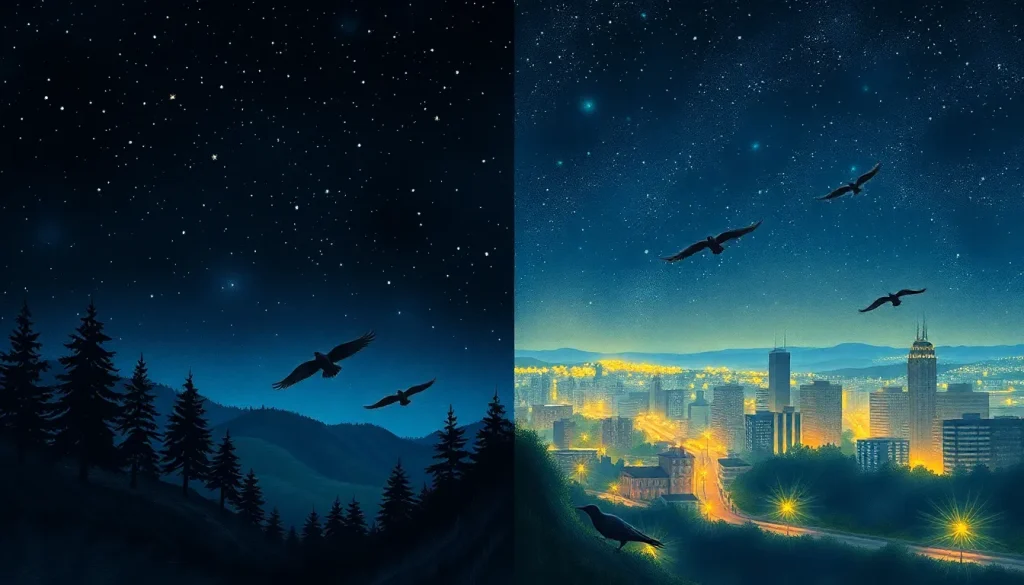
Light pollution is the alteration of natural light levels in the outdoor environment caused by artificial light sources. It encompasses several forms, including skyglow (the brightening of the night sky over inhabited areas), glare (excessive brightness that causes visual discomfort), light trespass (unwanted light spilling into areas where it is not needed), and clutter (excessive groupings of bright lights). Unlike many other forms of pollution, light pollution is immediately reversible—once the source is turned off or properly shielded, the effect disappears. However, its pervasive presence in modern society has fundamentally changed the nocturnal environment, with profound consequences for living organisms.
Ecosystem health refers to the condition of an ecological system in terms of its resilience, biodiversity, and ability to sustain the complex interactions among organisms and their physical environment. A healthy ecosystem maintains its structure and function over time, even when faced with disturbances. Light pollution acts as a novel disturbance that disrupts the natural light cycles that have shaped life on Earth for billions of years. Because nearly all organisms have evolved under predictable cycles of day and night, the introduction of artificial light at night can interfere with fundamental biological processes, from gene expression to ecosystem-level dynamics, ultimately threatening the stability and functioning of natural systems.
How It Works
Light pollution affects ecosystems primarily by disrupting the natural light-dark cycles that govern the behavior, physiology, and ecology of organisms. Most living things possess an internal biological clock, known as the circadian rhythm, which is synchronized by the daily cycle of light and darkness. Artificial light at night can reset or suppress these rhythms, leading to a cascade of effects. For example, in many species, the hormone melatonin is produced in darkness and suppressed by light; melatonin regulates sleep, immune function, and seasonal reproduction. When artificial light extends the perceived day length, it can alter breeding seasons, migration timing, and feeding patterns.
Beyond direct physiological effects, light pollution restructures ecological communities by changing the behavior of species. Nocturnal animals may avoid lit areas, fragmenting their habitat and limiting their foraging range. Predators that rely on darkness to hunt may find it harder to catch prey, while prey species may become more vulnerable. Insects, which are critical to food webs and pollination, are attracted to artificial lights, leading to increased mortality and disrupted pollination networks. Even plants are affected, as extended light exposure can alter flowering times and leaf senescence, with cascading effects on herbivores and the entire food chain. The mechanisms are diverse, but they all stem from the fundamental disruption of natural light signals that organisms have relied upon for millions of years.
Main Causes or Drivers
The primary driver of light pollution is the widespread and often inefficient use of outdoor artificial lighting. Urbanization and the expansion of infrastructure have led to a proliferation of streetlights, commercial lighting, and illuminated signage. Many of these fixtures are poorly designed, emitting light upward or horizontally rather than directing it downward where it is needed. This not only wastes energy but also contributes significantly to skyglow, which can extend the influence of light pollution far beyond urban centers into rural and even protected areas.
Another major factor is the transition to light-emitting diode (LED) technology. While LEDs are more energy-efficient and longer-lasting than traditional lighting, their widespread adoption has often been accompanied by an increase in overall light usage—a phenomenon known as the rebound effect. Moreover, many early LED installations used high-intensity blue-rich white light, which scatters more in the atmosphere and has a greater impact on circadian rhythms and wildlife. The lack of proper shielding, excessive brightness, and the use of cool color temperatures (above 3000 Kelvin) all exacerbate the problem. Other contributors include vehicle headlights, sports field lighting, and the illumination of buildings and monuments for aesthetic purposes.
Environmental and Human Impacts
Light pollution has far-reaching consequences for ecosystems. For wildlife, artificial light at night can disorient migratory birds, leading to collisions with illuminated buildings and communication towers. Sea turtle hatchlings, which instinctively move toward the brightest horizon (historically the moonlit ocean), are drawn inland by artificial lights, resulting in dehydration, predation, and death. Amphibians, such as frogs and salamanders, experience disrupted breeding calls and reduced foraging activity. Insects, the foundation of many food webs, suffer massive mortality around lights, and their attraction to artificial sources can alter plant-pollinator networks and reduce pollination success. Predator-prey dynamics are also affected; for instance, some bat species avoid lit areas, while others exploit the concentration of insects around lights, leading to imbalances.
In aquatic ecosystems, artificial light penetrates water bodies, affecting the vertical migration of zooplankton and the behavior of fish. Coral reefs, which rely on lunar cycles for synchronized spawning, can be disrupted by coastal lighting. On land, plants exposed to continuous light may experience delayed leaf fall, altered flowering times, and increased susceptibility to frost damage. These changes ripple through the food web, affecting herbivores, pollinators, and the entire community structure. For humans, light pollution is linked to sleep disorders, increased risk of certain cancers, and disruption of circadian rhythms, which can lead to metabolic and cardiovascular problems. The loss of the natural night sky also has cultural and aesthetic impacts, diminishing opportunities for stargazing and astronomical research.
Examples
One well-documented example is the impact of light pollution on sea turtles along the coast of Florida. Hatchling loggerhead and green sea turtles emerge from nests at night and use the brightness of the horizon over the ocean to find their way to the sea. Artificial lights from beachfront properties, streetlights, and parking lots can disorient them, causing them to crawl toward land instead of the water. Conservation efforts have focused on using turtle-friendly lighting—low-wattage, long-wavelength (amber or red) lights that are shielded and directed downward—to reduce this impact.
Another example involves migratory birds in North America. During spring and fall migrations, millions of birds fly at night, navigating by the stars. Bright city lights and illuminated tall buildings can attract and disorient them, leading to collisions and exhaustion. The “Lights Out” programs in cities like Chicago, New York, and Toronto encourage building owners to turn off unnecessary lights during migration seasons, significantly reducing bird mortality. In Europe, studies have shown that artificial light disrupts the breeding behavior of songbirds, causing them to sing earlier in the day and potentially affecting their reproductive success.
In the insect world, the decline of moth populations in lit areas has been linked to reduced pollination of night-blooming plants. Research in Switzerland demonstrated that streetlights reduce the pollination success of the common night-flowering plant, the meadow clary, by attracting moths away from the flowers. This example illustrates how light pollution can have subtle but significant effects on plant reproduction and ecosystem functioning.
Solutions
Addressing light pollution requires a combination of better lighting design, policy changes, and public awareness. The most effective solutions follow the principles of responsible outdoor lighting: use light only where it is needed, only when it is needed, and only in the amount necessary. This can be achieved through shielding fixtures to direct light downward, using timers and motion sensors to reduce unnecessary illumination, and selecting warm-colored lights with a color temperature of 3000 Kelvin or lower to minimize blue light emissions.
At the community level, municipalities can adopt lighting ordinances that set standards for new installations and retrofit existing ones. These ordinances often specify maximum allowable light levels, require full cutoff fixtures, and restrict the use of certain wavelengths near sensitive habitats. International Dark Sky Places, designated by the International Dark-Sky Association, serve as models for communities that have successfully implemented dark-sky friendly practices. Technological solutions, such as adaptive lighting systems that dim when no activity is detected, are also becoming more accessible. Importantly, reducing light pollution often leads to significant energy savings, making it an economically attractive intervention as well.
What Individuals Can Do
Individuals can play a crucial role in reducing light pollution through simple actions at home and in their communities. Start by assessing your own outdoor lighting: ensure that fixtures are fully shielded and directed downward, replace high-intensity bulbs with lower-wattage, warm-colored LEDs, and install motion sensors or timers so lights are only on when needed. Close curtains or blinds at night to prevent indoor light from spilling outside. When choosing new lighting, look for products with the International Dark-Sky Association’s Fixture Seal of Approval.
Beyond your property, you can advocate for responsible lighting in your neighborhood and local government. Support the adoption of lighting ordinances that protect the night sky and reduce ecological impacts. Participate in citizen science projects that monitor light pollution, such as the Globe at Night program, which helps track sky brightness worldwide. Educate friends and family about the importance of natural darkness for wildlife and human health. By making small changes and encouraging others to do the same, individuals can collectively make a significant difference in preserving the health of ecosystems and the beauty of the night sky.
FAQ
What is light pollution?
Light pollution is the excessive or misdirected artificial light that brightens the night sky, causes glare, and spills into areas where it is not needed. It includes skyglow, light trespass, glare, and clutter.
How does light pollution affect ecosystems?
It disrupts the natural light-dark cycles that regulate animal behavior, plant growth, and ecological interactions. This can lead to disoriented migration, altered feeding and breeding patterns, increased mortality, and changes in community structure.
Why does light pollution matter?
It matters because it threatens biodiversity, degrades ecosystem health, wastes energy, and has negative effects on human well-being. Preserving natural darkness is essential for the functioning of many species and for maintaining the ecological services they provide.
References
- International Dark-Sky Association. (n.d.). Light Pollution. Retrieved from https://www.darksky.org/light-pollution/
- Longcore, T., & Rich, C. (2004). Ecological light pollution. Frontiers in Ecology and the Environment, 2(4), 191–198.
- Falchi, F., Cinzano, P., Duriscoe, D., Kyba, C. C. M., Elvidge, C. D., Baugh, K., ... & Furgoni, R. (2016). The new world atlas of artificial night sky brightness. Science Advances, 2(6), e1600377.
- Gaston, K. J., Bennie, J., Davies, T. W., & Hopkins, J. (2013). The ecological impacts of nighttime light pollution: a mechanistic appraisal. Biological Reviews, 88(4), 912–927.
- Kyba, C. C. M., Kuester, T., Sánchez de Miguel, A., Baugh, K., Jechow, A., Hölker, F., ... & Guanter, L. (2017). Artificially lit surface of Earth at night increasing in radiance and extent. Science Advances, 3(11), e1701528.