In brief
At a glance
Quick Facts
- Definition
- Environmental risk inequality refers to the disproportionate exposure of certain populations to environmental hazards and the unequal capacity to cope with them.
- Key Drivers
- Income inequality, racial discrimination, land-use policies, and lack of political power.
- Health Impact
- Low-income and minority communities often face higher rates of asthma, cancer, and other pollution-related diseases.
- Global Example
- In the U.S., race is the strongest predictor of living near hazardous waste facilities.
- Climate Change
- Developing countries contribute least to greenhouse gas emissions but suffer the most from climate impacts.
- Environmental Justice
- A movement and field of study addressing the fair treatment and meaningful involvement of all people in environmental decisions.
- Historical Context
- Redlining and discriminatory zoning have concentrated environmental hazards in communities of color.
- Economic Dimension
- Wealthier areas can afford better environmental quality and legal resources to fight pollution.
Key Takeaways
- Environmental risks—including pollution, toxic waste, and climate hazards—are not shared equally; marginalized communities bear a disproportionate burden.
- This inequality is driven by socioeconomic disparities, systemic discrimination, land-use decisions, and unequal political power.
- Evidence consistently shows that low-income groups and communities of color face higher exposure to environmental hazards and have fewer resources to cope.
- Addressing this imbalance is critical for public health, social justice, and sustainable development.
What Is Why Environmental Risk Is Unequally Distributed?
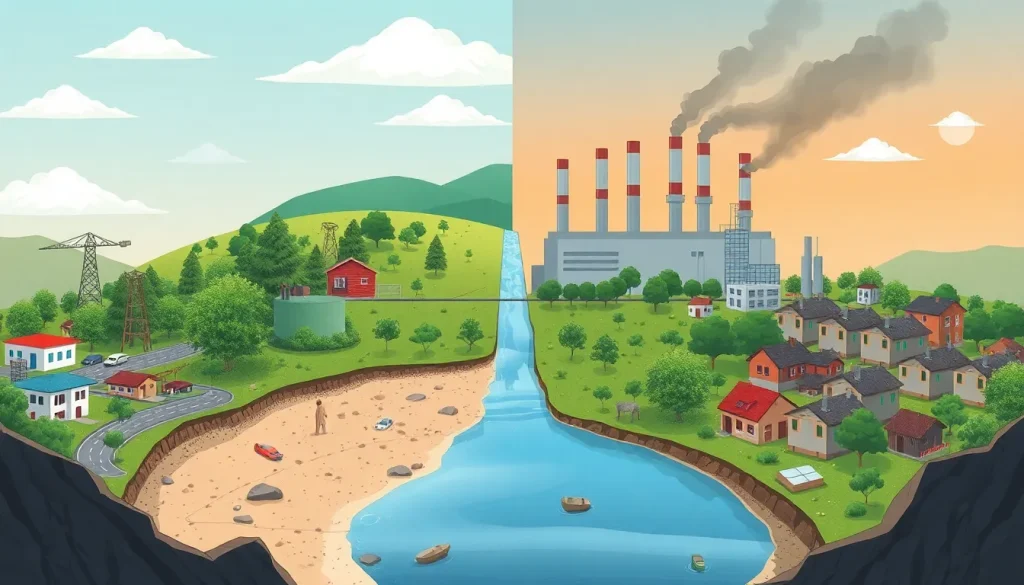
Environmental risk inequality refers to the uneven distribution of environmental hazards and benefits across different social groups. It means that some populations—often defined by income, race, ethnicity, or geographic location—face significantly higher exposure to pollutants, toxic substances, and climate-related threats, while enjoying fewer environmental amenities such as green spaces and clean water. This concept is central to the field of environmental justice, which examines the fair treatment and meaningful involvement of all people in environmental decision-making.
The unequal distribution of environmental risk is not a random occurrence; it is the result of complex interactions between economic forces, historical legacies, and institutional practices. For example, industrial facilities and waste disposal sites are frequently located near low-income neighborhoods or communities of color, a pattern observed in many countries. Moreover, these same communities often lack the political influence and financial resources to resist such siting decisions or to mitigate the resulting health impacts. The phenomenon extends beyond local pollution to global issues like climate change, where developing nations—despite contributing the least to greenhouse gas emissions—suffer the most severe consequences.
How It Works
The unequal distribution of environmental risk operates through several interconnected mechanisms. First, there is the siting of hazardous facilities: landfills, incinerators, chemical plants, and major transportation corridors are disproportionately placed in or near disadvantaged communities. This is often a result of historical land-use patterns, where residential segregation and industrial zoning concentrated environmental burdens in certain areas. Over time, these areas become less desirable, leading to lower property values and attracting further polluting activities—a self-reinforcing cycle.
Second, exposure pathways differ. Low-income and minority populations are more likely to live in substandard housing with lead paint, mold, and poor ventilation, increasing indoor air pollution. They may also rely on contaminated water sources or work in occupations with higher environmental hazards, such as agriculture or waste management. Third, social vulnerability amplifies the impact: limited access to healthcare, lower incomes, and pre-existing health conditions make these groups more susceptible to environmental harms. Finally, political and economic marginalization means that affected communities often lack the voice to influence environmental regulations or the resources to seek legal redress.
Main Causes or Drivers
Several structural factors drive the unequal distribution of environmental risk:
- Economic inequality: Wealthier individuals and corporations can afford to live in cleaner areas and have the means to oppose locally unwanted land uses (LULUs). In contrast, low-income communities may welcome industrial development for the jobs it brings, even if it poses health risks.
- Systemic discrimination: Historical practices such as redlining, racial zoning, and discriminatory housing policies have concentrated minority populations in environmentally hazardous areas. This legacy persists, as race remains a strong predictor of exposure to pollution independent of income.
- Land-use planning and zoning: Decisions about where to place industrial facilities, waste sites, and infrastructure often prioritize economic efficiency over public health, with little input from affected residents. Zoning laws can segregate residential areas from industrial zones, but historically they have also been used to protect affluent neighborhoods while burdening others.
- Global economic structures: On an international scale, wealthy nations export hazardous waste and polluting industries to developing countries, where environmental regulations are weaker and labor is cheaper. This creates “pollution havens” that shift environmental risks to poorer populations.
- Lack of political power: Marginalized groups are often underrepresented in decision-making bodies, making it difficult to block harmful projects or advocate for cleanup and enforcement.
What the Evidence Shows
A large body of research documents the unequal distribution of environmental risk. In the United States, studies have found that race is the most significant predictor of living near hazardous waste facilities, even after controlling for income and other factors. For instance, communities of color are disproportionately located near Superfund sites, chemical plants, and major highways. Similar patterns exist in Europe, where lower-income neighborhoods and immigrant communities experience higher levels of air pollution and noise.
Globally, the evidence is stark. The World Health Organization reports that 92% of pollution-related deaths occur in low- and middle-income countries. Climate change impacts—such as extreme heat, flooding, and vector-borne diseases—disproportionately affect developing nations and marginalized groups within all countries. Indigenous peoples, who often depend directly on natural resources, face unique risks from environmental degradation and resource extraction. These disparities are not merely statistical; they translate into measurable differences in health outcomes, life expectancy, and quality of life.
Environmental and Human Impacts
The unequal distribution of environmental risk has profound consequences for both ecosystems and human well-being. Environmentally, the concentration of pollution in certain areas can lead to localized degradation of air, water, and soil, harming biodiversity and ecosystem services. For example, industrial contamination can render land unusable for agriculture and contaminate drinking water supplies, creating long-term environmental damage that is costly to remediate.
For humans, the impacts are severe and multifaceted. Health effects include higher rates of respiratory diseases, cancer, neurological disorders, and reproductive problems in overburdened communities. Children are especially vulnerable, with exposure to lead and air pollution linked to developmental delays and asthma. Beyond physical health, environmental inequality contributes to chronic stress, mental health issues, and reduced economic opportunities. It also perpetuates cycles of poverty, as illness and environmental degradation limit educational attainment and workforce participation. Ultimately, these disparities undermine social cohesion and violate the principle of equal protection under the law.
Regional Differences
While environmental risk inequality is a global phenomenon, its manifestations vary by region. In North America, the environmental justice movement has highlighted the intersection of race and pollution, with African American, Latino, and Indigenous communities facing disproportionate burdens. In Europe, income and migration status are key factors, with Eastern European countries and marginalized urban neighborhoods experiencing higher pollution levels. In Asia, rapid industrialization has led to severe air and water pollution that disproportionately affects rural-to-urban migrants and low-income residents in megacities.
In Africa and Latin America, extractive industries such as mining and oil drilling often operate near indigenous territories and poor communities, causing deforestation, water contamination, and health crises. Small island developing states face existential threats from sea-level rise and extreme weather, despite contributing minimally to global emissions. These regional differences underscore that while the drivers are similar—power imbalances, economic pressures, and weak governance—the specific risks and affected populations depend on local historical, political, and environmental contexts.
Solutions
Addressing the unequal distribution of environmental risk requires a multi-pronged approach that tackles root causes and empowers affected communities. Key strategies include:
- Strengthening environmental regulations: Governments can enforce stricter pollution controls, mandate cumulative impact assessments, and ensure that no community bears a disproportionate share of environmental burdens. Environmental justice laws can require equitable distribution of benefits and burdens.
- Community engagement and empowerment: Meaningful participation of affected residents in decision-making processes is essential. This includes providing technical assistance, funding community-based monitoring, and ensuring access to information.
- Targeted investments: Resources should be directed toward cleaning up contaminated sites, improving infrastructure (e.g., water systems, green spaces), and providing healthcare and economic opportunities in overburdened areas.
- Integrating environmental justice into all policies: Climate adaptation, urban planning, transportation, and energy policies should explicitly consider equity implications to avoid perpetuating disparities.
- Global cooperation: International agreements can help prevent the export of hazardous waste and pollution to developing countries, support climate resilience in vulnerable nations, and promote sustainable development that prioritizes the well-being of all people.
While progress has been made in some regions, achieving environmental equity remains a long-term challenge that requires sustained political will, public awareness, and systemic change.
FAQ
What is environmental risk inequality?
Environmental risk inequality is the uneven distribution of environmental hazards—such as pollution, toxic waste, and climate threats—across different social groups, with marginalized communities facing higher exposure and fewer resources to cope.
How does environmental risk inequality affect communities?
It leads to higher rates of illness, reduced quality of life, and economic hardship in overburdened communities. It also perpetuates cycles of poverty and limits opportunities for affected populations.
Why does environmental risk inequality matter?
It matters because it violates principles of fairness and equal protection, undermines public health, and hinders sustainable development. Addressing it is essential for creating just and resilient societies.
References
- World Health Organization. Environmental Health Inequalities.
- United States Environmental Protection Agency. Environmental Justice.
- Bullard, Robert D. Dumping in Dixie: Race, Class, and Environmental Quality.