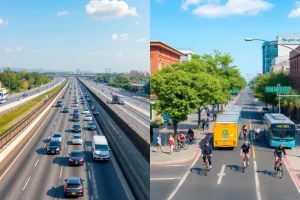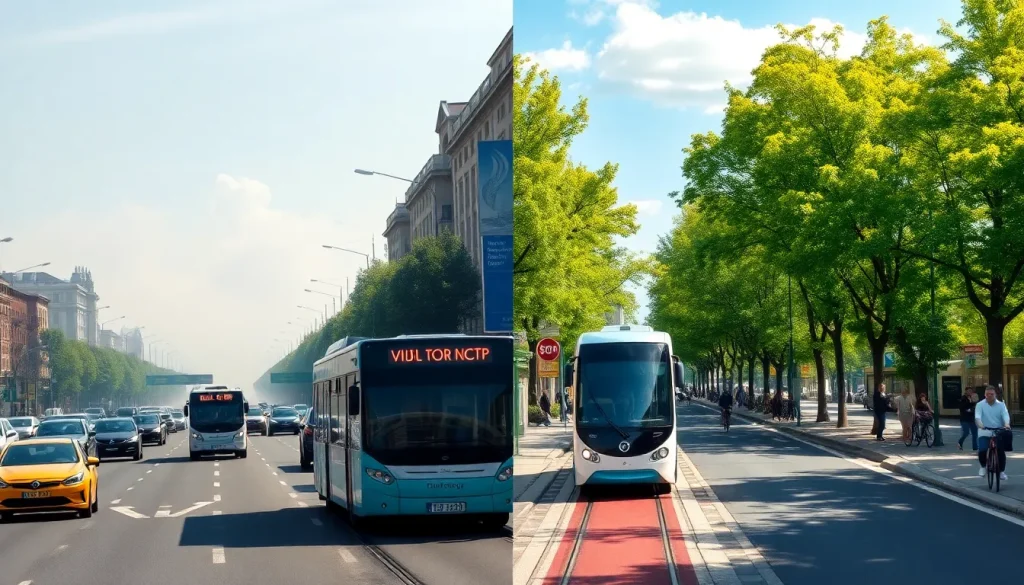
In brief
At a glance
Quick Facts
- Verdict
- Promising but context-dependent
- Problem addressed
- Urban transport greenhouse gas and air pollutant emissions
- Evidence strength
- Moderate to strong, with variability
- Potential scale
- Regional to global, depending on city density
- Relative cost
- High upfront, moderate to high operating
- Time to impact
- Years to decades
Quick verdict
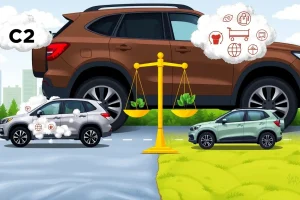
Public transport has a proven but context-dependent ability to reduce urban greenhouse gas and air pollutant emissions. When systems achieve high ridership, are integrated with compact land use, and use clean energy, they can significantly lower per capita transport emissions. However, poorly planned services with low occupancy may yield negligible benefits or even increase emissions relative to private cars. Public transport is a promising component of urban decarbonization strategies, but it is not a standalone solution.
Problem addressed
Urban areas are major sources of greenhouse gas (GHG) emissions, with transport accounting for a significant share—often 20–30% in developed cities and growing rapidly in developing ones. Private cars, especially those powered by internal combustion engines, are the primary contributors, emitting carbon dioxide (CO₂), nitrogen oxides (NOₓ), particulate matter (PM), and other pollutants. These emissions drive climate change and degrade local air quality, leading to respiratory illnesses, premature deaths, and reduced quality of life. Traffic congestion further increases fuel consumption and emissions per trip. The problem is compounded by urban sprawl, which lengthens travel distances and reinforces car dependency. Public transport is proposed as a key intervention to break this cycle by providing a more efficient, lower-emission alternative to private car use.
How the solution works
Public transport reduces emissions through several interconnected mechanisms:
- Mode shift: By offering a viable alternative to private cars, public transport can shift trips to higher-occupancy vehicles. A full bus or train carries many passengers, drastically cutting per capita fuel use and emissions compared to single-occupancy cars. Even diesel buses, when reasonably full, emit less CO₂ per passenger-kilometer than the average car.
- Increased vehicle efficiency: Public transport vehicles are often more fuel-efficient per seat than private cars, and many systems are transitioning to electric or hydrogen propulsion, eliminating tailpipe emissions entirely.
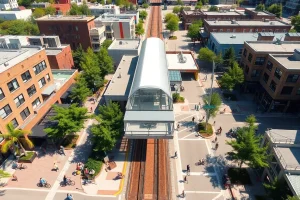
- Land use and density effects: High-quality public transport can stimulate compact, mixed-use development around stations (transit-oriented development), reducing the need for long trips and making walking and cycling more feasible for last-mile connections. This reduces overall vehicle-kilometers traveled (VKT).
- Congestion reduction: By removing cars from the road, public transport can ease traffic congestion, which in turn improves fuel efficiency for remaining vehicles and reduces emissions from stop-and-go traffic.
The net effect depends on occupancy rates, the energy source of the transit system, and the extent to which it replaces car trips rather than generating new travel.
Evidence strength
The evidence base is extensive but mixed, drawing from life-cycle assessments (LCAs), city-level case studies, and transportation modeling. LCAs consistently show that public transport modes—buses, trams, metros—have lower per-passenger-kilometer GHG emissions than private cars, provided they are not running nearly empty. For example, a typical diesel bus with average occupancy emits roughly 0.1–0.2 kg CO₂ per passenger-km, compared to 0.2–0.3 kg for a single-occupancy car. Electric rail and buses can approach zero operational emissions if powered by renewable energy.
However, real-world outcomes vary. Some cities that invested heavily in public transport saw modest or no net emission reductions, partly because new transit induced additional travel or because road space freed up was quickly filled by other vehicles (induced demand). Studies also highlight that construction emissions for rail infrastructure can be substantial, requiring years of operational savings to offset. The overall evidence is rated as moderate to strong, but context is critical. There is a lack of long-term, controlled experiments; most data come from observational studies and simulations.
Potential scale
Public transport’s emission reduction potential is substantial at the urban and regional level, but global scalability is constrained by existing urban form and infrastructure. In dense cities with high existing car use, a well-designed system could reduce transport emissions by 10–30% or more over time, according to modeling studies. If combined with electrification and renewable energy, the reduction could be even larger. However, in low-density, car-dependent suburbs, the potential is limited because public transport cannot effectively compete with the convenience of cars, and ridership remains low. The global potential is significant but not unlimited; it is best viewed as one element of a broader sustainable mobility strategy.
Cost considerations
Costs vary enormously by mode and context. Capital costs for rail-based systems (metro, light rail) are high, often ranging from tens to hundreds of millions of dollars per kilometer, while bus rapid transit (BRT) is cheaper but still requires dedicated lanes and stations. Operating costs also differ: rail systems have high fixed costs but low marginal costs per passenger, while buses have lower fixed costs but higher per-passenger operating costs. Public transport almost always requires ongoing public subsidy, as fare revenue rarely covers full costs. Cost-effectiveness in terms of emission reduction (dollars per ton of CO₂ avoided) is moderate compared to other measures like building insulation or renewable energy, but public transport offers co-benefits that can justify the investment. In many cases, the most cost-effective approach is to improve existing bus services and implement demand management (e.g., congestion pricing) rather than building new rail lines.
Implementation time
Deployment timelines range from months for bus service improvements to decades for new metro lines. Quick wins include bus priority lanes, service frequency increases, and fare integration, which can be implemented in 1–3 years and yield immediate ridership gains. Major rail projects typically take 5–15 years from planning to operation. Emission reductions accrue gradually as ridership builds and land use patterns adjust; full benefits may take 10–20 years or more. The long lead time means public transport is not a rapid climate fix but a long-term structural intervention.
Environmental benefits
Beyond GHG reductions, public transport can lower emissions of NOₓ, PM, and other local air pollutants, especially when using electric or Euro VI diesel vehicles. It reduces noise pollution compared to congested car traffic. By enabling denser cities, it preserves greenfield land and reduces the need for extensive road and parking infrastructure, which has its own embodied emissions and ecological impacts. Life-cycle analyses indicate that per passenger-kilometer, public transport generally has a smaller environmental footprint than private cars across multiple indicators, including energy use, land take, and resource consumption.
Social and economic co-benefits
Public transport provides numerous co-benefits:
- Accessibility and equity: It offers mobility to those who cannot drive, including the young, elderly, low-income, and disabled, improving access to jobs, education, and services.
- Public health: Reduced air pollution and increased physical activity from walking to stations improve health outcomes. Traffic accidents also tend to decrease as car use declines.
- Economic productivity: Reduced congestion saves time and fuel for businesses. Transit-oriented development can increase property values and agglomeration economies.
- Social inclusion: Affordable public transport can reduce social exclusion and connect marginalized communities.
- Urban livability: Less traffic and more pedestrian-friendly streets enhance quality of life.
Risks and unintended consequences
Public transport investments can have negative side effects:
- Induced demand: New capacity may attract new riders but also free up road space, encouraging more driving or longer trips, partially offsetting emission gains.
- Gentrification and displacement: Transit-oriented development can raise property values and rents, displacing low-income residents who may rely most on public transport.
- High costs and opportunity cost: Expensive rail projects may divert funds from more cost-effective emission reduction measures or from improving existing bus networks.
- Low ridership risk: If ridership falls short of projections, per-passenger emissions can be higher than those of cars, and the system becomes a financial burden.
- Construction emissions: Building tunnels, stations, and rail lines generates significant embodied carbon, which can take years to pay back through operational savings.
- Rebound effects: Cheaper or faster travel may encourage more total travel, increasing overall energy use if not coupled with demand management.
Where it works best
Public transport is most effective in reducing emissions under the following conditions:
- High population and employment density: Dense urban cores and corridors with mixed land use generate high ridership and short trip distances.
- Supportive policies: Congestion pricing, parking restrictions, low-emission zones, and fuel taxes make driving less attractive and public transport more competitive.
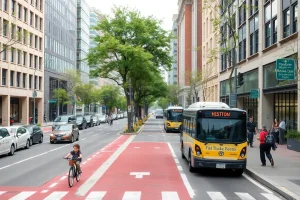
- Integration with active transport: Safe walking and cycling routes to stations increase catchment areas and reduce last-mile emissions.
- Clean energy supply: Electrified systems powered by renewable energy maximize emission reductions.
- Frequent, reliable, and affordable service: High-quality service is essential to attract and retain riders.
- Existing congestion: In already congested cities, public transport can offer time savings that make it a compelling alternative.
Where it may not work
Public transport is less likely to reduce emissions in:
- Low-density, car-dependent suburbs: Dispersed origins and destinations make fixed-route transit inefficient; buses may run nearly empty, leading to higher per-passenger emissions than cars.
- Cities with cheap or subsidized fuel and parking: When driving is artificially cheap, public transport struggles to compete on cost or convenience.
- Areas with poor governance or funding: Inadequate maintenance, unreliable service, and safety concerns deter ridership.
- Rapidly growing cities with unplanned sprawl: If transit is built after sprawl is entrenched, it may fail to attract sufficient ridership or influence land use.
- Contexts where alternatives like electric two-wheelers or shared mobility are more suitable: In some developing cities, informal paratransit or electric scooters may offer more agile and lower-emission solutions.
Comparison with alternatives
Public transport is one of many strategies to reduce urban transport emissions. It is often compared with:
- Vehicle electrification: Switching to electric cars, buses, and two-wheelers directly reduces tailpipe emissions. This is complementary to public transport, as electric buses and trains can further lower transit’s footprint. However, electrification alone does not address congestion, land use, or equity issues.
- Active transport (walking, cycling): These modes have near-zero emissions and significant health benefits. They are most effective for short trips and can be integrated with public transport for longer journeys.
- Telecommuting and digitalization: Reducing the need to travel can cut emissions directly, but may also encourage sprawl if not managed.
- Car-sharing and ride-hailing: These can reduce car ownership but may increase VKT if they replace public transport trips or add deadheading miles. Their net emission impact is uncertain.
- Congestion pricing and low-emission zones: These demand-management tools can reduce traffic and emissions while generating revenue for public transport. They are often more cost-effective than building new infrastructure.
Public transport is most effective when combined with these alternatives in an integrated sustainable mobility strategy.
Case studies
Real-world examples illustrate the range of outcomes:
- Curitiba, Brazil: Pioneered bus rapid transit (BRT) in the 1970s, integrating dedicated busways with land use planning. The system achieved high ridership and helped shape compact urban growth, contributing to lower per capita transport emissions compared to other Brazilian cities. However, recent increases in car ownership and congestion have eroded some gains.
- London, UK: The congestion charge introduced in 2003, combined with sustained investment in buses and the Underground, led to a significant mode shift and reduced traffic emissions in the charging zone. Bus ridership increased, and air quality improved. The policy package is often cited as a success, though emission reductions have been partly offset by population growth.
- Bogotá, Colombia: The TransMilenio BRT system, launched in 2000, carries a large share of the city’s trips and has reduced emissions per passenger compared to the informal buses it replaced. However, overcrowding, maintenance issues, and competition from motorcycles have limited its impact, and the city still struggles with air pollution.
- Los Angeles, USA: Despite significant investment in rail and bus services, ridership has declined in recent years, and the system has not substantially reduced car use or emissions. The low-density, polycentric urban form and abundant parking make driving more convenient for most trips, illustrating the limits of public transport in car-oriented cities.
Final assessment
Public transport can reduce urban emissions, but its success is not automatic. It is a proven tool when deployed in dense, mixed-use cities with supportive policies and clean energy. In such contexts, it offers substantial environmental, social, and economic benefits. However, in low-density, car-dependent areas, it is often a poor investment for emission reduction, and resources may be better spent on vehicle electrification, active transport, or demand management. The evidence suggests that public transport should be part of a broader, integrated strategy rather than a standalone solution. Decision-makers should carefully assess local conditions, prioritize cost-effective improvements to existing services, and pair transit investments with land use planning and disincentives for driving. When done right, public transport is a cornerstone of sustainable urban mobility.
FAQ
Does public transport always reduce emissions?
No. The net emission reduction depends on the occupancy rate, the energy source of the transit vehicles, and the extent to which trips are shifted from private cars. A nearly empty diesel bus can emit more CO₂ per passenger-kilometer than a full car. Construction emissions for new infrastructure can also temporarily increase the carbon footprint. Therefore, public transport must be well-planned and well-used to deliver emission benefits.
Is rail better than buses for reducing emissions?
Generally, rail systems (metro, light rail) have lower per-passenger emissions than buses when occupancy is high, because they are more energy-efficient and often electric. However, rail requires much higher upfront investment and is less flexible. In lower-density corridors, a well-run bus service with high occupancy can be more cost-effective and still achieve significant emission reductions. The best choice depends on local demand, density, and available resources.
How does public transport compare to electric cars in reducing emissions?
Both can reduce tailpipe emissions, but they address different aspects of the problem. Electric cars eliminate direct exhaust emissions and can be powered by renewable energy, but they do not reduce congestion, land use for parking, or the embodied emissions of manufacturing many individual vehicles. Public transport can move large numbers of people efficiently, reducing overall vehicle-kilometers and enabling denser cities. A combined approach—electrifying public transport and private vehicles while promoting mode shift—is often the most effective strategy.
References
- IPCC (2022). Climate Change 2022: Mitigation of Climate Change. Contribution of Working Group III to the Sixth Assessment Report of the Intergovernmental Panel on Climate Change.
- Litman, T. (2023). Evaluating Public Transit Benefits and Costs. Victoria Transport Policy Institute.
- Cervero, R. (2013). Bus Rapid Transit (BRT): An Efficient and Competitive Mode of Public Transport. European Journal of Transport and Infrastructure Research, 13(3), 193-212.
- International Energy Agency (IEA). (2021). Net Zero by 2050: A Roadmap for the Global Energy Sector.
- National Academies of Sciences, Engineering, and Medicine. (2020). Reducing Greenhouse Gas Emissions from Transportation: Opportunities and Challenges. The National Academies Press.