In brief
At a glance
Quick Facts
- Verdict
- Promising but unproven at scale
- Problem addressed
- Atmospheric CO₂ removal and soil improvement
- Evidence strength
- Moderate
- Potential scale
- Global
- Relative cost
- Moderate
- Time to impact
- Years to decades
Quick verdict
Enhanced rock weathering is a promising but still emerging carbon dioxide removal (CDR) approach. It leverages a natural geochemical process to capture atmospheric CO₂ and store it durably in the ocean, while potentially improving soil health and crop yields. However, large-scale deployment remains unproven, with significant uncertainties around net carbon removal, verification, energy requirements, and environmental side effects. It is best viewed as a complementary climate solution that requires further research and careful governance.
Problem addressed
Atmospheric CO₂ concentrations have risen to levels unprecedented in human history, driving global warming and climate disruption. Even with aggressive emissions reductions, most pathways to limit warming to 1.5°C or 2°C require the active removal of billions of tonnes of CO₂ from the atmosphere this century. Enhanced rock weathering (ERW) is one of several negative emissions technologies proposed to help close this gap, while also addressing soil acidification and nutrient depletion in agricultural systems.
How the solution works
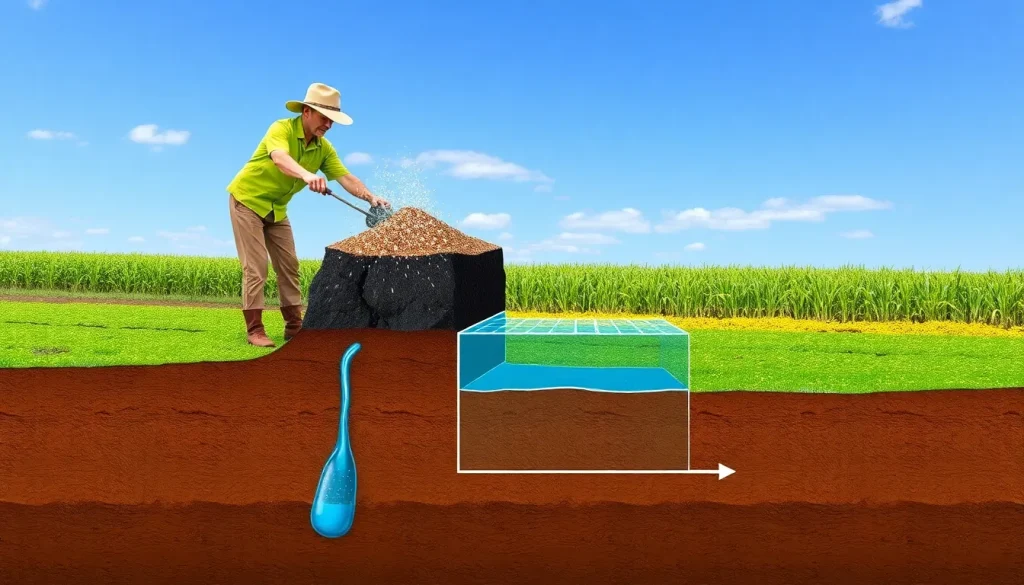
Natural rock weathering is a slow process in which rainwater (containing dissolved CO₂ as carbonic acid) reacts with silicate minerals, releasing calcium, magnesium, and other cations, and converting CO₂ into bicarbonate ions (HCO₃⁻). These bicarbonates eventually flow through groundwater to the ocean, where the carbon remains stored for tens of thousands of years. ERW accelerates this process by mining, crushing, and spreading finely ground silicate rocks—typically basalt or olivine—on land surfaces, especially croplands. The increased surface area of the rock dust speeds up the chemical reactions, drawing down CO₂ from the air at a much faster rate. In soils, the dissolution also releases plant nutrients and can raise pH, reducing the need for agricultural lime.

Evidence strength
The fundamental geochemistry of enhanced weathering is well established through laboratory experiments and natural analogue studies. Field trials and pilot projects have demonstrated increased soil alkalinity, elevated bicarbonate concentrations in drainage water, and improved crop yields in some cases. However, the evidence base for net carbon removal at scale is still limited. Key challenges include accurately measuring the amount of CO₂ actually removed from the atmosphere over large areas and long timescales, accounting for secondary emissions from mining, grinding, and transport, and understanding interactions with soil biology and hydrology. Most published estimates of global potential rely on modeling rather than extensive field data. The scientific consensus, as reflected in the IPCC Sixth Assessment Report, classifies enhanced weathering as a CDR method with moderate potential but high uncertainty.
Potential scale
Theoretical estimates of global carbon removal potential range from 0.5 to 4 billion tonnes of CO₂ per year, depending on the availability of suitable rock, land area, and energy. Realistically, practical constraints—including the energy and emissions associated with mining, crushing, and transporting billions of tonnes of rock—may limit the achievable scale to the lower end of this range. Deployment could occur on agricultural lands worldwide, particularly in regions with warm, moist climates that favor rapid weathering. The co-benefit of improved soil fertility could incentivize adoption, but scaling to a meaningful climate impact would require a massive industrial effort, comparable in size to global coal mining.
Cost considerations
Cost estimates for enhanced rock weathering vary widely, typically ranging from $50 to $200 per tonne of CO₂ removed, depending on rock type, transport distances, grinding fineness, and monitoring requirements. The energy needed for crushing and grinding is a major cost driver; using renewable energy can reduce both costs and the carbon footprint of the process. When compared to other CDR methods, ERW is generally cheaper than direct air capture (often >$300/tCO₂) but more expensive than afforestation (often <$50/tCO₂). However, these comparisons are complicated by differences in permanence, co-benefits, and verification costs. Revenue from increased crop yields or carbon credit markets could improve economic viability, but such markets are still immature.
Implementation time
ERW can be deployed relatively quickly on existing agricultural land, as it uses conventional mining and spreading equipment. Carbon removal begins immediately upon application, but the process is slow: significant drawdown occurs over years to decades. Verification of net carbon removal requires long-term monitoring of soil and water chemistry, which delays the ability to issue reliable carbon credits. Full-scale deployment would require building out mining, crushing, and transport infrastructure, which could take a decade or more.
Environmental benefits
The primary environmental benefit is the removal of CO₂ from the atmosphere, with storage in the ocean as bicarbonate for millennia. This also helps mitigate ocean acidification by increasing alkalinity. On land, the addition of silicate rock dust can raise soil pH, reducing the need for lime and potentially lowering nitrous oxide emissions from acidic soils. The release of nutrients like potassium, phosphorus, and micronutrients can improve soil fertility and crop yields, reducing the demand for synthetic fertilizers. Some studies suggest yield increases of 10–20% for certain crops, though results vary.
Social and economic co-benefits
Farmers could benefit from higher crop yields and reduced fertilizer costs, improving livelihoods and food security. The creation of a new industry around rock dust production and distribution could generate employment in mining, processing, and logistics, particularly in rural areas. If integrated into carbon markets, ERW could provide an additional revenue stream for land managers. However, these benefits depend on equitable access to markets and technology, and on avoiding negative impacts on local communities.
Risks and unintended consequences
Several risks and trade-offs must be managed. The mining, crushing, and transport of rock are energy-intensive and can generate significant CO₂ emissions if powered by fossil fuels, potentially negating the climate benefit. Some silicate rocks contain heavy metals such as nickel and chromium, which could accumulate in soils or leach into water supplies, posing ecological and human health risks. Dust from spreading operations may affect air quality and respiratory health. Changes in soil chemistry could alter microbial communities and greenhouse gas fluxes, including possible increases in nitrous oxide emissions. Large-scale application might also affect freshwater alkalinity and aquatic ecosystems in ways that are not yet fully understood. Finally, the permanence of carbon storage depends on the bicarbonate reaching the ocean; if it precipitates as carbonate on land, some CO₂ could be re-released.
Where it works best
ERW is most effective in warm, humid regions with acidic soils, where weathering rates are naturally high and the agronomic benefits are greatest. Areas with abundant, suitable silicate rock (e.g., basalt quarries) and existing agricultural infrastructure are ideal. Co-location with renewable energy sources for grinding can minimize the carbon footprint. Tropical and subtropical croplands, such as those in Brazil, India, and Southeast Asia, are often cited as high-potential regions.
Where it may not work
Arid and cold regions have very low weathering rates, making ERW ineffective. Areas far from rock sources face high transport costs and emissions. Sensitive ecosystems, such as pristine forests or wetlands, could be harmed by dust or altered water chemistry. Regions with high background levels of heavy metals in soils or groundwater may be unsuitable due to contamination risks. Steep or erosion-prone land may lose applied rock dust before significant weathering occurs.
Comparison with alternatives
Compared to afforestation and reforestation, ERW uses less land and offers more permanent carbon storage, but it is more expensive and less proven. Against direct air capture (DAC), ERW is cheaper but less controllable and harder to verify. Bioenergy with carbon capture and storage (BECCS) can provide energy but competes for land and water; ERW can be co-deployed on existing farmland without displacing food production. Ocean alkalinity enhancement is a related marine approach that shares similar chemistry but avoids land-use conflicts. ERW is best seen as a complement to, not a replacement for, deep emissions cuts and other CDR methods.
Case studies
Several real-world projects are testing ERW. Project Vesta is conducting field trials on beaches and coastal areas in the Caribbean, using olivine sand to enhance weathering and measure carbon removal. The UK-based company UNDO spreads basalt dust on agricultural fields and monitors soil and water chemistry; early results indicate increased alkalinity and crop yields. In the United States, Lithos Carbon works with farmers to apply basalt and uses soil samples to quantify carbon removal. These projects have demonstrated the feasibility of spreading and initial weathering, but long-term, peer-reviewed data on net carbon removal are still being collected. Independent verification remains a key challenge across all pilots.
Final assessment
Enhanced rock weathering is a scientifically grounded CDR method with attractive co-benefits for agriculture. However, it is not yet proven at scale, and many uncertainties remain regarding net carbon removal, environmental risks, and cost-effectiveness. It holds promise as part of a diversified portfolio of climate solutions, particularly in tropical agricultural regions with suitable rock and energy sources. Rigorous life-cycle assessments, transparent monitoring protocols, and robust governance frameworks are essential to ensure that deployment leads to genuine climate benefits without unintended harm. For now, ERW warrants continued research, pilot-scale testing, and cautious, well-regulated early deployment.
FAQ
How does enhanced rock weathering differ from natural weathering?
Natural weathering is the slow breakdown of rocks by rain and soil acids over millennia. Enhanced rock weathering accelerates this by grinding rocks into fine dust to increase surface area and spreading it on land, speeding up the chemical reactions that consume CO₂. The goal is to achieve meaningful carbon removal within human-relevant timescales of years to decades.
What are the main risks of enhanced rock weathering?
Key risks include potential heavy metal contamination from rock dust, air pollution from dust spreading, high energy use and emissions from mining and grinding, uncertain impacts on soil and water ecosystems, and the challenge of accurately verifying net carbon removal. If not powered by clean energy, the process could emit more CO₂ than it removes.
Can enhanced rock weathering be used on non-agricultural land?
Yes, it can be applied to forests, grasslands, or coastal areas, but agricultural land is often preferred because the co-benefits (improved soil pH and fertility) can offset costs and incentivize adoption. Non-agricultural deployment may face higher costs and lower weathering rates, and could disrupt natural ecosystems.
References
- IPCC, 2022: Climate Change 2022: Mitigation of Climate Change. Working Group III contribution to the Sixth Assessment Report.
- Beerling, D.J., et al. (2020). Potential for large-scale CO2 removal via enhanced rock weathering with croplands. Nature, 583, 242–248.
- Taylor, L.L., et al. (2016). Enhanced weathering strategies for stabilizing climate and averting ocean acidification. Nature Climate Change, 6, 402–406.
- Project Vesta (ongoing field trials). https://www.projectvesta.org/
- UNDO (2023). Enhanced Weathering: A nature-based carbon removal solution. https://un-do.com/