In brief
At a glance
Quick Facts
- Share of human-caused CO₂ absorbed by natural sinks annually
- Approximately 55%
- Ocean absorption of anthropogenic CO₂ since industrial era
- About 25%
- Carbon stored in global forests
- ~861 gigatons, more than the atmosphere
- Carbon locked in permafrost
- ~1,500 gigatons, twice the atmospheric amount
- Amazon sink status in some regions
- Shifted from net sink to net source in southeastern areas
- Potential of soil carbon sequestration for mitigation
- Could offset 5–15% of global emissions
- Impact of extreme wildfires on carbon sinks
- Can release billions of tons of CO₂, turning forests into sources
- Increase in ocean acidity since industrial revolution
- 30% increase, affecting marine carbon pump
Key Takeaways
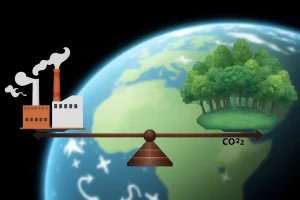
- Natural carbon sinks—forests, oceans, and soils—currently absorb about half of human-caused CO₂ emissions, but their effectiveness is declining.
- Climate change itself is the primary driver of this decline, through processes like wildfires, ocean warming, and permafrost thaw.
- As sinks weaken, more CO₂ stays in the atmosphere, amplifying global warming and creating a dangerous feedback loop.
- Protecting and restoring natural sinks is essential for climate mitigation, but it cannot replace the need to cut fossil fuel emissions.
What Is Why Natural Carbon Sinks Are Becoming Less Reliable?
Natural carbon sinks are Earth’s systems that absorb more carbon dioxide (CO₂) from the atmosphere than they release, helping to regulate the global climate. The phrase “why natural carbon sinks are becoming less reliable” refers to the observed and projected decline in the capacity of these sinks—such as forests, oceans, and soils—to sequester carbon at historical rates. This decline is driven by a combination of climate change impacts and direct human activities, and it poses a significant threat to efforts to stabilize atmospheric CO₂ concentrations.
Understanding this trend is critical because natural sinks have been a crucial buffer against climate change, removing roughly half of the CO₂ emitted by human activities each year. If their efficiency continues to drop, the rate of CO₂ accumulation in the atmosphere will accelerate, making climate targets harder to achieve and increasing the severity of global warming impacts.
Overview
Natural carbon sinks are integral to the global carbon cycle. The main sinks are terrestrial ecosystems (forests, grasslands, soils) and the ocean. Together, they have absorbed about 55% of anthropogenic CO₂ emissions since the industrial revolution, with the ocean taking up roughly 25% and land sinks about 30%. However, multiple lines of evidence indicate that the efficiency of these sinks is not constant; it varies from year to year and is showing signs of long-term decline in many regions. This overview examines the mechanisms behind sink performance and the factors that are undermining their reliability.

How It Works
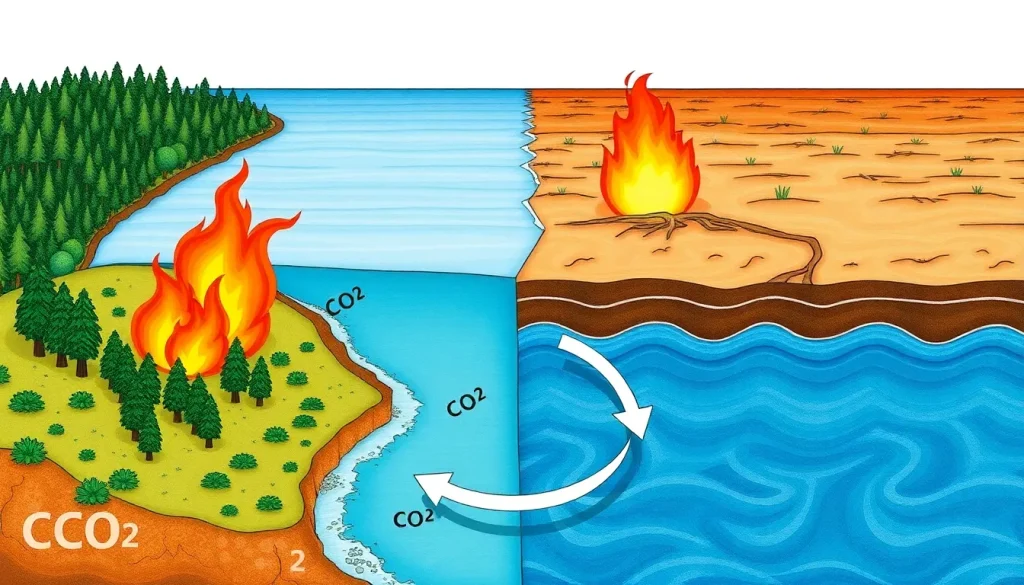
Natural carbon sinks operate through biological and chemical processes that transfer CO₂ from the atmosphere into long-term storage. In terrestrial ecosystems, photosynthesis by plants absorbs CO₂, which is then stored in biomass (trunks, roots, leaves) and soil organic matter. Forests, particularly tropical and boreal, are major carbon stores. Soils hold vast amounts of carbon in the form of decomposed organic material. The ocean absorbs CO₂ through two main mechanisms: the physical dissolution of CO₂ in surface waters, which is then transported to the deep ocean via circulation, and the biological pump, where phytoplankton photosynthesize and sink to the depths when they die.
The reliability of these sinks depends on the balance between carbon uptake and carbon release. For example, a healthy forest is a net sink, but if it burns or is logged, it becomes a source. Similarly, ocean absorption can be reduced if warming waters decrease CO₂ solubility or disrupt circulation patterns. The key point is that sinks are dynamic and sensitive to environmental conditions.
Main Causes or Drivers
Several interconnected factors are causing natural carbon sinks to become less reliable:
- Climate Change: Rising temperatures increase the rate of soil respiration, releasing carbon from soils. Heatwaves and droughts stress forests, reducing photosynthesis and increasing tree mortality. Warmer oceans hold less CO₂ and can disrupt the biological pump.
- Deforestation and Land-Use Change: Clearing forests for agriculture or development directly removes a major sink and often releases stored carbon. Even partially degraded forests sequester less carbon.
- Wildfires: More frequent and intense fires, exacerbated by climate change, release massive amounts of carbon from forests and peatlands, and can convert a sink into a source for years.
- Ocean Acidification and Warming: Increased CO₂ in the ocean lowers pH, which can harm calcifying organisms that are part of the biological pump. Warming also reduces mixing and nutrient supply, affecting phytoplankton growth.
- Permafrost Thaw: In Arctic regions, thawing permafrost releases ancient carbon stored in frozen soils as CO₂ and methane, a potent greenhouse gas, creating a feedback loop.
- Nitrogen Deposition and Pollution: While some nitrogen can fertilize plant growth, excessive deposition can lead to soil acidification and nutrient imbalances, reducing long-term carbon storage capacity.
Environmental and Human Impacts
The declining reliability of natural carbon sinks has profound consequences. Environmentally, it accelerates the buildup of atmospheric CO₂, intensifying global warming and its associated effects: more extreme weather, sea-level rise, and ecosystem disruption. The loss of sink capacity also reduces the planet’s natural resilience, making it harder for ecosystems to adapt to changing conditions.
For human societies, the impacts are equally severe. Food security is threatened by reduced agricultural productivity due to climate change and soil degradation. Water resources are affected as forests, which regulate water cycles, are lost or damaged. Coastal communities face greater risks from ocean acidification and warming, which harm fisheries and coral reefs. Economically, the costs of climate adaptation and disaster recovery rise, and the window for effective mitigation narrows, potentially leading to more drastic and expensive measures in the future.
Regional Differences
The reliability of carbon sinks varies significantly by region. Tropical forests, such as the Amazon, have historically been massive carbon sinks, but they are now showing signs of saturation and even turning into net sources in some areas due to deforestation and drought. Boreal forests in Canada and Russia are experiencing increased fire frequency and permafrost thaw, reducing their sink strength. The Southern Ocean is a critical carbon sink, but its uptake has been observed to fluctuate with climate variability, and long-term trends suggest a weakening due to changes in wind patterns and ocean circulation. In contrast, some temperate forests are experiencing increased growth due to longer growing seasons and CO₂ fertilization, but this benefit is often offset by disturbances like pests and fires. Understanding these regional differences is crucial for targeted conservation and management strategies.
Solutions
Addressing the decline in natural carbon sink reliability requires both global and local actions. The most fundamental step is to rapidly reduce greenhouse gas emissions to limit further climate change, which is the primary stressor on sinks. Beyond that, specific measures include:
- Forest Conservation and Reforestation: Protecting existing forests, especially old-growth and tropical forests, and restoring degraded lands can enhance carbon uptake. Sustainable forest management practices can also improve resilience.
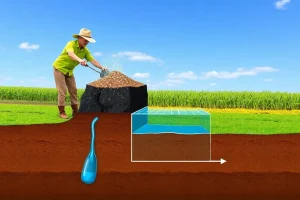
- Soil Carbon Sequestration: Agricultural practices such as no-till farming, cover cropping, and agroforestry can increase soil organic carbon. Protecting peatlands and wetlands is critical as they store vast amounts of carbon.
- Ocean-Based Solutions: Reducing overfishing and pollution can help maintain healthy marine ecosystems that contribute to the biological pump. Some proposed techniques, like ocean alkalinity enhancement, aim to increase CO₂ absorption, but they require careful evaluation of risks and benefits.
- Fire Management: Implementing controlled burns, creating firebreaks, and improving early warning systems can reduce the risk of catastrophic wildfires.
- Policy and International Cooperation: Agreements like the Paris Agreement provide frameworks for emissions reductions and sink protection. Financial mechanisms such as REDD+ (Reducing Emissions from Deforestation and Forest Degradation) incentivize developing countries to preserve forests.
It is important to note that while enhancing natural sinks is valuable, it cannot compensate for continued fossil fuel use. Sinks have a finite capacity, and relying on them too heavily risks further degradation.
FAQ
What is a natural carbon sink?
A natural carbon sink is a system that absorbs more carbon dioxide from the atmosphere than it releases, such as forests, oceans, and soils.
Why are natural carbon sinks becoming less reliable?
They are becoming less reliable due to climate change impacts like rising temperatures, droughts, wildfires, and ocean acidification, as well as direct human activities like deforestation.
Can we restore natural carbon sinks?
Yes, through conservation, reforestation, and sustainable land management, but restoration alone cannot offset continued high emissions; it must be paired with deep emissions cuts.
References
- IPCC Sixth Assessment Report, Working Group I: The Physical Science Basis
- Global Carbon Project, Annual Carbon Budget
- NASA Earth Observatory: The Carbon Cycle