In brief
At a glance
Quick Facts
- Core premise of green growth
- Economic growth can be decoupled from environmental degradation through technological innovation.
- Core premise of degrowth
- Sustainable well-being requires reducing material and energy throughput, especially in wealthy nations.
- Key metric in debate
- Absolute decoupling of GDP from resource use and carbon emissions.
- Origin of degrowth term
- First used in 1972 by André Gorz, later popularized by ecological economists.
- Green growth policy example
- The European Green Deal aims for net-zero emissions by 2050 while pursuing economic growth.
- Degrowth policy example
- Proposals include job guarantees, universal basic services, and work-time reduction.
- Main criticism of green growth
- Empirical evidence shows absolute decoupling at the global scale is not occurring fast enough.
- Main criticism of degrowth
- Critics argue it could lead to economic instability and lacks political feasibility.
Key Takeaways
- Green growth aims to decouple economic growth from environmental harm through technological innovation and resource efficiency, while degrowth calls for a planned reduction of material and energy use in wealthy nations to achieve ecological sustainability.
- The central dispute is whether absolute decoupling of GDP from resource consumption and emissions is possible at the global scale and within the required timeframe.
- Green growth is embedded in mainstream policy frameworks like the Sustainable Development Goals, whereas degrowth challenges the growth imperative itself and proposes alternative well-being metrics.
- Both perspectives highlight the urgency of addressing climate change and biodiversity loss, but they diverge on whether economic growth can be part of the solution or must be abandoned.
What Is Green Growth vs Degrowth?
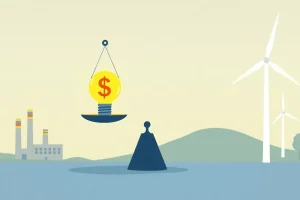
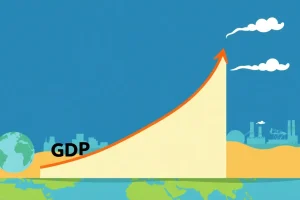
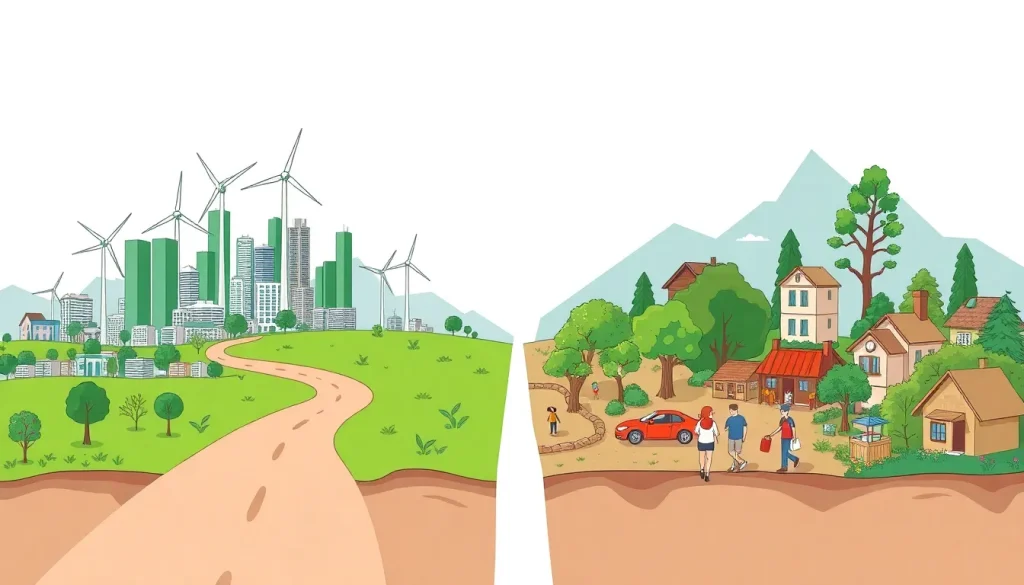
Green growth is an economic paradigm that asserts it is possible to continue expanding economic output (measured by GDP) while simultaneously reducing environmental impacts, such as greenhouse gas emissions, resource depletion, and pollution. It relies on the concept of decoupling—breaking the historical link between economic activity and environmental degradation—through technological innovation, renewable energy, circular economy models, and efficiency improvements. Proponents argue that green growth can deliver prosperity, employment, and poverty reduction without exceeding planetary boundaries, making it a politically attractive framework for governments and international organizations.
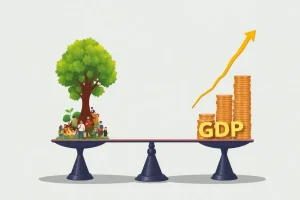
Degrowth, on the other hand, is a socio-economic theory and movement that challenges the feasibility and desirability of perpetual economic growth. It posits that infinite growth on a finite planet is biophysically impossible and that high-income nations must intentionally scale down their material and energy throughput to achieve ecological sustainability. Degrowth advocates emphasize that well-being does not depend on rising GDP and call for a transformation of economic systems toward sufficiency, sharing, and localism. The term itself is a deliberate provocation, intended to open space for imagining a society that thrives without growth. The debate between green growth and degrowth is not merely academic; it underpins fundamental disagreements about the future of global environmental governance and the meaning of progress.
Overview
The green growth vs degrowth debate is a central fault line in ecological economics and sustainability science. Green growth, endorsed by institutions like the OECD, World Bank, and many national governments, frames environmental challenges as market failures that can be corrected through pricing mechanisms, green investment, and innovation. It aligns with the broader sustainable development agenda, which seeks to reconcile economic, social, and environmental goals. Degrowth, rooted in heterodox economics and political ecology, argues that the growth imperative itself is the root cause of ecological crises and social inequality. It calls for a systemic shift away from GDP as a measure of progress, toward indicators of genuine well-being, and for policies that reduce resource consumption while improving quality of life.
The two perspectives differ fundamentally on the possibility of decoupling. Green growth proponents distinguish between relative decoupling (resource use grows slower than GDP) and absolute decoupling (resource use declines while GDP grows). They argue that absolute decoupling is achievable with the right policies. Degrowth advocates counter that historical evidence shows only relative decoupling at best, and that absolute decoupling at the speed and scale required to meet climate targets is unrealistic. They also highlight the risk of rebound effects, where efficiency gains lead to increased consumption. The debate thus extends to questions of social justice: whether the Global South can develop without following the resource-intensive path of the North, and whether rich countries must reduce their consumption to allow for equitable resource distribution.
History
The intellectual roots of green growth can be traced to the concept of sustainable development, popularized by the 1987 Brundtland Report and the 1992 Rio Earth Summit. These frameworks sought to harmonize economic development with environmental protection, giving rise to ideas like eco-efficiency and the circular economy. The term “green growth” gained prominence in the early 2000s, particularly after the 2008 financial crisis, when it was promoted as a way to stimulate economic recovery while addressing climate change. Organizations such as the OECD, UNEP, and the World Bank launched green growth strategies, and the concept was integrated into the Sustainable Development Goals (SDG 8: Decent Work and Economic Growth).
Degrowth has older philosophical roots in critiques of industrialism and consumerism, but its modern formulation emerged in the 1970s. The term “décroissance” was first used by French intellectual André Gorz in 1972, the same year the Club of Rome published The Limits to Growth, which modeled the consequences of exponential economic and population growth on a finite planet. Ecological economists like Nicholas Georgescu-Roegen and Herman Daly developed the theoretical foundations, emphasizing entropy and the steady-state economy. The degrowth movement coalesced in the early 2000s, with international conferences, academic publications, and activist networks advocating for a post-growth society. Key figures include Serge Latouche, Tim Jackson, and Giorgos Kallis. While degrowth remains a heterodox perspective, it has influenced broader discussions on well-being, post-growth, and doughnut economics.
How It Works
Green growth operates through a set of policy tools and technological strategies aimed at decoupling. These include:
- Renewable energy transition: Shifting from fossil fuels to solar, wind, hydro, and other low-carbon sources to reduce emissions while maintaining energy supply.
- Resource efficiency: Improving the productivity of materials and energy through better design, manufacturing, and recycling, often framed as a circular economy.
- Carbon pricing: Implementing carbon taxes or cap-and-trade systems to internalize the social cost of emissions and incentivize low-carbon innovation.
- Green investment: Public and private funding for clean technology, sustainable infrastructure, and research and development.
- Eco-innovation: Developing new products and processes that reduce environmental footprints, such as electric vehicles, precision agriculture, and green building materials.
Degrowth proposes a different set of mechanisms, focused on reducing the scale of the economy while enhancing well-being:
- Reducing working hours: Sharing available work to lower unemployment and reduce production, while giving people more leisure time.
- Universal basic services: Providing free or affordable access to essential services like healthcare, education, housing, and public transport, decoupling well-being from income.
- Downscaling production and consumption: Phasing out unnecessary and harmful industries (e.g., fossil fuels, fast fashion, planned obsolescence) and promoting sufficiency-oriented lifestyles.
- Localism and relocalization: Shortening supply chains, supporting local food systems, and strengthening community economies to reduce transport emissions and increase resilience.
- Alternative well-being metrics: Replacing GDP with indicators like the Genuine Progress Indicator, Happy Planet Index, or subjective well-being surveys to guide policy.
What the Evidence Shows
Empirical research on decoupling reveals a mixed picture. At the national level, some high-income countries have achieved absolute decoupling of territorial CO₂ emissions from GDP, partly due to the shift to services and offshoring of manufacturing. However, when consumption-based emissions (including imports) are accounted for, the decoupling is often weaker or disappears. Globally, material footprint and resource use continue to rise alongside GDP, indicating only relative decoupling. A comprehensive review of decoupling studies found that absolute decoupling of resource use from GDP is rare and typically temporary, while absolute decoupling of carbon emissions is more common but still insufficient to meet Paris Agreement targets.
Degrowth proponents point to the lack of evidence for absolute, permanent, and global decoupling at the pace required. They argue that technological improvements are often outpaced by growth in consumption (the Jevons paradox or rebound effect). For example, more efficient engines may lead to more driving, and energy savings may be spent on other resource-intensive goods. Modeling studies suggest that achieving climate goals while maintaining economic growth would require unprecedented rates of decoupling, far beyond historical trends. Conversely, degrowth scenarios show that reducing energy demand through sufficiency measures can significantly lower the need for risky negative emissions technologies. The evidence base is contested, with green growth advocates highlighting the potential of emerging technologies and policy packages, while degrowth scholars emphasize the biophysical limits and the need for demand-side solutions.
Importance and Impact
The green growth vs degrowth debate has profound implications for climate policy, biodiversity conservation, and social equity. If green growth is viable, then existing political and economic structures can be reformed to achieve sustainability without fundamental systemic change. This underpins international agreements like the Paris Agreement and the European Green Deal, which assume that emissions can be reduced while economies continue to grow. If degrowth is correct, then these efforts are destined to fail, and a more radical transformation is necessary, including rethinking global trade, finance, and consumption patterns.
The debate also influences how societies measure progress. Green growth often retains GDP as a key metric, supplemented by environmental indicators. Degrowth challenges the primacy of GDP and advocates for well-being frameworks that prioritize health, equality, and ecological integrity. This has practical consequences for policy evaluation, budget allocation, and public discourse. Moreover, the debate touches on global justice: degrowth emphasizes that wealthy nations have a historical responsibility to reduce their resource use to allow space for development in the Global South, while green growth tends to focus on technology transfer and green investment in developing countries. The outcome of this debate will shape the trajectory of human civilization in the Anthropocene.
Benefits, Limitations and Trade-offs
Green growth offers several benefits: it is politically palatable, aligns with existing economic interests, and can drive innovation and job creation in green sectors. It provides a narrative of hope and opportunity, avoiding the politically difficult message of sacrifice. However, its limitations are significant. The required rates of absolute decoupling have not been observed historically, and reliance on future technologies carries risks. Rebound effects can erode efficiency gains, and green growth may perpetuate inequalities if the benefits are not equitably shared. There is also a risk of “greenwashing,” where superficial changes mask continued environmental harm.
Degrowth directly addresses the root cause of ecological overshoot—the scale of the economy—and prioritizes well-being over growth. It offers a coherent framework for reducing resource use while improving quality of life through public services and reduced working hours. However, degrowth faces major political and economic challenges. A planned reduction of economic output could lead to unemployment, reduced tax revenues, and social unrest if not managed carefully. Critics argue that degrowth is politically infeasible in growth-dependent democracies and could harm vulnerable populations if implemented poorly. There are also trade-offs: degrowth in wealthy nations might reduce global demand for exports from developing countries, potentially affecting their economies. Both paradigms involve trade-offs between environmental goals, economic stability, and social equity, and the optimal path may involve elements of both.
FAQ
What is the difference between green growth and degrowth?
Green growth seeks to continue economic growth while reducing environmental harm through technology and efficiency. Degrowth argues that growth itself must be halted and reversed in wealthy nations to achieve sustainability, focusing instead on well-being and reduced resource use.
How does degrowth propose to improve well-being?
Degrowth aims to improve well-being by reducing working hours, providing universal basic services, strengthening local communities, and shifting cultural values away from consumerism. The goal is to enhance quality of life without relying on rising material consumption.
Why does the green growth vs degrowth debate matter?
It shapes global environmental policy and determines whether societies can address climate change and resource depletion within the current economic system or need a fundamental transformation. The debate influences international agreements, national strategies, and public understanding of sustainability.
References
- OECD (2011). Towards Green Growth. OECD Publishing.
- Hickel, J., & Kallis, G. (2020). Is Green Growth Possible? New Political Economy, 25(4), 469–486.
- European Environment Agency (2021). Growth without economic growth. EEA Briefing.