In brief
At a glance
Quick Facts
- Status
- Planetary Boundaries: 6 of 9 boundaries transgressed; Ecological Footprint: 1.7 Earths (overshoot)
- Control variable
- PB: multiple (e.g., CO2 ppm, extinction rate); EF: global hectares (demand vs. biocapacity)
- Proposed boundary
- PB: e.g., 350 ppm CO2, <10 E/MSY; EF: Footprint ≤ biocapacity (1 Earth)
- Current value
- PB: CO2 ~417 ppm, extinction rate >100 E/MSY; EF: 2.8 gha/person, biocapacity 1.6 gha/person
- Pre-industrial baseline
- PB: Holocene (e.g., 280 ppm CO2); EF: 1961 Footprint ~0.7 Earths
Current status
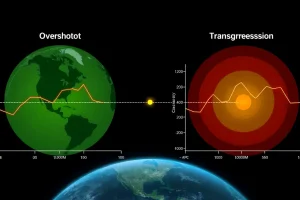
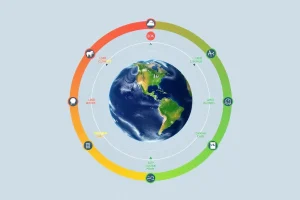
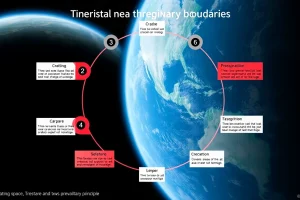
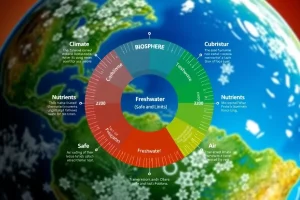
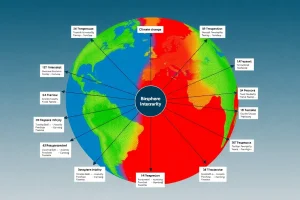
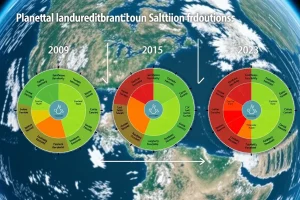
As of the 2023 update to the Planetary Boundaries framework, six of the nine boundaries are assessed to be transgressed: climate change, biosphere integrity (genetic diversity and functional integrity), land-system change, freshwater change, biogeochemical flows (nitrogen and phosphorus), and novel entities (including plastics and synthetic chemicals). The remaining three boundaries—stratospheric ozone depletion, atmospheric aerosol loading, and ocean acidification—are within the safe operating space, though ocean acidification is approaching the boundary. In contrast, the Ecological Footprint, as calculated by the Global Footprint Network, indicates that humanity is currently using the equivalent of 1.7 Earths, meaning that human demand on nature exceeds the planet’s biocapacity by approximately 70%. This overshoot has been persistent since the early 1970s, and Earth Overshoot Day—the date when humanity’s demand exceeds what Earth can regenerate in that year—has been moving earlier each year, falling in late July in 2023.
Control variable
The Planetary Boundaries framework does not have a single control variable; instead, it identifies nine Earth-system processes with individual control variables. For example, the climate change boundary uses atmospheric CO2 concentration (350 ppm) and radiative forcing (1 W/m² above pre-industrial) as control variables. The biosphere integrity boundary uses genetic diversity (extinction rate) and functional integrity (e.g., Biodiversity Intactness Index). The Ecological Footprint, on the other hand, uses a single aggregate control variable: global hectares (gha) of biologically productive land and sea area required to produce the resources consumed and absorb the waste generated by a given population, compared to the Earth’s biocapacity (also in gha). The control variable is thus the ratio of Footprint to biocapacity, with a value greater than 1 indicating overshoot.
Proposed boundary or threshold
For the Planetary Boundaries framework, each of the nine boundaries has a proposed safe limit, often with a zone of uncertainty and a danger zone. For example, the climate change boundary is set at 350 ppm CO2 (with an uncertainty range of 350–450 ppm) and radiative forcing of +1.0 W/m² (range 1.0–1.5 W/m²). The biosphere integrity boundary for genetic diversity is set at an extinction rate of less than 10 extinctions per million species-years (E/MSY), with a danger zone above 100 E/MSY. For the Ecological Footprint, the threshold is simply the Earth’s biocapacity, which is the amount of biologically productive area available. In 2023, global biocapacity was approximately 1.6 global hectares per person, while the global Ecological Footprint was about 2.8 global hectares per person, resulting in an overshoot of 75%.
Current measured value
According to the 2023 update of the Planetary Boundaries framework, six boundaries are transgressed: climate change (CO2 concentration ~417 ppm, radiative forcing ~2.91 W/m²), biosphere integrity (extinction rate tens to hundreds of times above background, functional integrity declining), land-system change (global forest cover below boundary), freshwater change (both green and blue water boundaries transgressed), biogeochemical flows (nitrogen and phosphorus cycles severely disrupted), and novel entities (chemical pollution, plastics). The Ecological Footprint for 2023 (based on 2019 data) is estimated at 2.8 global hectares per person, while biocapacity is 1.6 global hectares per person, resulting in an ecological deficit of 1.2 global hectares per person. This means humanity’s demand exceeds Earth’s regenerative capacity by 75%.
How the boundary is calculated
The Planetary Boundaries framework uses a combination of Earth-system models, paleoclimate data, and contemporary observations to define thresholds for each process. For example, the climate change boundary is based on ice-core data showing that atmospheric CO2 levels during the Holocene (the past 10,000 years) fluctuated around 280 ppm, and models suggest that exceeding 350 ppm risks triggering irreversible ice-sheet loss. The Ecological Footprint is calculated by aggregating human demand for six land-use types: cropland, grazing land, fishing grounds, built-up land, forest area, and carbon footprint (the land required to sequester CO2 emissions). This demand is compared to the Earth’s biocapacity, which is the productive area available. Both are expressed in global hectares, a standardized unit accounting for differences in productivity. The Footprint methodology uses national and international datasets on consumption, trade, and land use.
Historical trend
In the Planetary Boundaries framework, the pre-industrial Holocene epoch serves as the baseline for a stable Earth system. Since the Industrial Revolution, human activities have pushed several boundaries from the safe zone into the zone of increasing risk or beyond. For instance, atmospheric CO2 has risen from ~280 ppm to over 417 ppm, and the extinction rate has increased by orders of magnitude. The Ecological Footprint has shown a steady increase since the 1960s, with global overshoot beginning around 1970. The total Footprint has grown from about 0.7 Earths in 1961 to 1.7 Earths in 2023, driven by rising population, consumption, and carbon emissions. The carbon component of the Footprint has grown from a small fraction to over 60% of the total Footprint.
What is driving the change
The primary drivers of planetary boundary transgression are human activities: fossil fuel combustion, deforestation, agricultural intensification, industrial production, and waste generation. These activities increase greenhouse gas emissions, disrupt nutrient cycles, reduce biodiversity, and introduce novel entities. The Ecological Footprint is driven by similar factors: carbon emissions (the largest component), food demand (cropland, grazing, fishing), and resource extraction. Population growth and rising per capita consumption, particularly in high-income countries, are key underlying drivers. The shift toward more resource-intensive diets and energy systems amplifies the Footprint.
What crossing the boundary means
Transgressing a planetary boundary increases the risk of abrupt or irreversible environmental changes. For example, crossing the climate boundary raises the likelihood of ice-sheet collapse, permafrost thaw, and shifts in ocean circulation. Crossing the biosphere boundary could lead to ecosystem collapse and loss of resilience. In the Ecological Footprint, overshoot means that humanity is depleting natural capital and accumulating waste (e.g., CO2 in the atmosphere) faster than ecosystems can regenerate. Persistent overshoot can lead to resource scarcity, ecosystem degradation, and reduced biocapacity, creating a downward spiral. Both frameworks warn that exceeding these limits undermines the stability of the Earth system and human well-being.
Regional variations
The Planetary Boundaries framework is global in scope, but some boundaries have strong regional dimensions. For instance, freshwater use and land-system change are assessed at both global and regional scales, with some regions (e.g., South Asia, the Sahel) already experiencing severe water scarcity or deforestation. The Ecological Footprint is explicitly calculated at national and regional levels, revealing stark inequalities: high-income countries typically have Footprints far exceeding their biocapacity, while low-income countries often have Footprints below their biocapacity but face high vulnerability to global overshoot. For example, the United States has a Footprint of about 8.1 gha per person, while biocapacity is 3.4 gha per person; in contrast, India’s Footprint is 1.2 gha per person, close to its biocapacity of 0.5 gha per person, but still in deficit.
Interaction with other boundaries
The Planetary Boundaries framework explicitly recognizes interactions among boundaries; transgressing one can amplify pressures on others. For example, climate change exacerbates biodiversity loss, alters freshwater cycles, and increases ocean acidification. The Ecological Footprint, as an aggregate measure, inherently captures some of these interactions by including multiple demand categories, but it does not model feedbacks or tipping points. The Footprint’s carbon component is closely linked to the climate change and ocean acidification boundaries, while its cropland and grazing components relate to land-system change, freshwater use, and biogeochemical flows. Thus, the two frameworks are complementary: the Footprint provides a high-level metric of overall human pressure, while the Planetary Boundaries framework details specific Earth-system thresholds.
Impacts on people and ecosystems
Transgressing planetary boundaries and exceeding biocapacity have profound impacts. Climate change leads to extreme weather, sea-level rise, and food insecurity. Biodiversity loss undermines ecosystem services like pollination, water purification, and disease regulation. Freshwater overuse causes shortages and ecosystem degradation. The Ecological Footprint’s overshoot indicates that humanity is eroding the natural capital base, leading to deforestation, soil degradation, collapsing fisheries, and climate change. These environmental changes disproportionately affect vulnerable populations, exacerbating poverty, displacement, and conflict. Both frameworks highlight the risk of undermining the Earth’s life-support systems, with severe consequences for human well-being and future generations.
Possible pathways back toward the safe zone
To return to the safe operating space, the Planetary Boundaries framework suggests transformative changes: decarbonizing the energy system, adopting sustainable agriculture, reducing nutrient pollution, protecting biodiversity, and managing freshwater resources sustainably. For the Ecological Footprint, reducing overshoot involves decreasing the carbon footprint (e.g., renewable energy, energy efficiency), changing consumption patterns (e.g., plant-based diets, reduced waste), and enhancing biocapacity (e.g., reforestation, soil restoration). Both frameworks emphasize the need for systemic shifts in economic and social systems, including circular economies, sustainable urban planning, and equitable resource distribution. International cooperation and policy interventions, such as carbon pricing and conservation agreements, are critical.
Scientific uncertainty
The Planetary Boundaries framework involves significant uncertainties in defining safe thresholds, due to incomplete understanding of Earth-system dynamics, non-linear feedbacks, and regional heterogeneity. Some boundaries (e.g., novel entities, atmospheric aerosol loading) are particularly uncertain because of limited data and complex interactions. The Ecological Footprint methodology has uncertainties related to data quality, assumptions about productivity, and the carbon sequestration rate. Critics argue that the Footprint oversimplifies complex ecological processes and may not accurately reflect sustainability at local scales. Both frameworks are continually refined as new data and models become available.
Criticism and alternative frameworks
The Planetary Boundaries framework has been criticized for its global-scale focus, which may overlook regional thresholds, and for the arbitrary nature of some boundary values. Some scientists argue that the concept of a single safe operating space is too simplistic. The Ecological Footprint has been criticized for its carbon component, which assumes a fixed sequestration rate, and for not accounting for non-renewable resource depletion or pollution other than carbon. Alternative frameworks include the Doughnut Economics model (combining planetary boundaries with social foundations), the Living Planet Index, and material flow analysis. These frameworks offer complementary perspectives on sustainability and human impact.
FAQ
What is the main difference between the Planetary Boundaries and the Ecological Footprint?
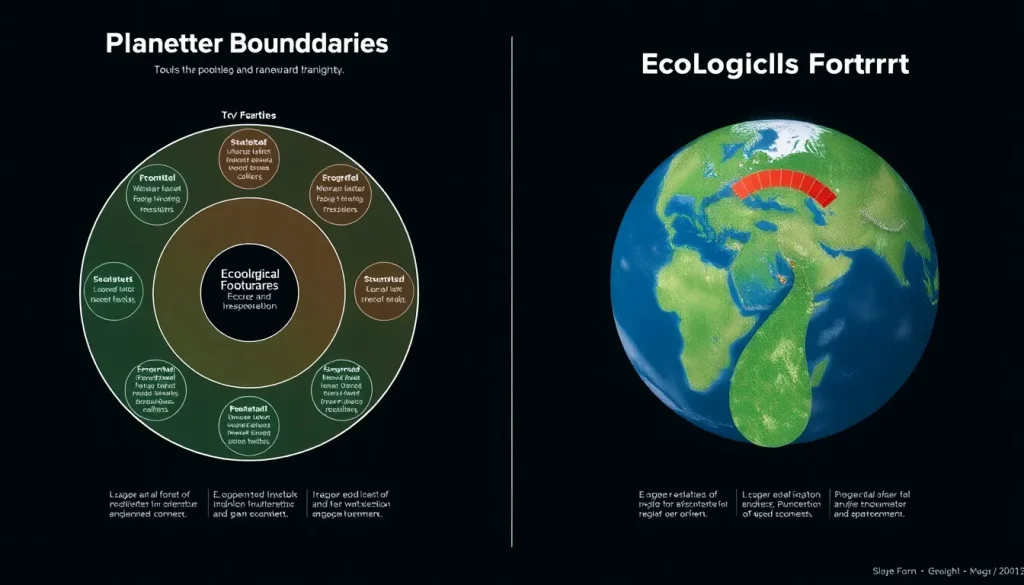
The Planetary Boundaries framework identifies specific Earth-system processes and sets quantitative limits for each, focusing on the stability of the Earth system. The Ecological Footprint is an aggregate measure of human demand on nature, comparing consumption to biocapacity. While the former is process-based and global, the latter is a single metric applicable at multiple scales.
Can the Ecological Footprint be used to assess whether we are within planetary boundaries?
Not directly. The Ecological Footprint provides an overall measure of resource demand and waste generation, but it does not map directly onto the nine planetary boundaries. However, a high Footprint, especially its carbon component, correlates with transgression of several boundaries like climate change and biosphere integrity. The two frameworks are complementary.
Which framework is more useful for policy-making?
Both have strengths. The Planetary Boundaries framework helps identify critical Earth-system limits and prioritize actions for specific issues (e.g., nitrogen pollution). The Ecological Footprint is a powerful communication tool that simplifies sustainability into a single number, making it accessible for public awareness and high-level policy. Many experts recommend using them together for a comprehensive view.
References
- Rockström, J., et al. (2009). "A safe operating space for humanity." Nature, 461, 472–475.
- Steffen, W., et al. (2015). "Planetary boundaries: Guiding human development on a changing planet." Science, 347(6223), 1259855.
- Richardson, K., et al. (2023). "Earth beyond six of nine planetary boundaries." Science Advances, 9(37), eadh2458.
- Global Footprint Network. (2023). "National Footprint and Biocapacity Accounts, 2023 Edition."
- Wackernagel, M., & Rees, W. (1996). "Our Ecological Footprint: Reducing Human Impact on the Earth." New Society Publishers.