In brief
At a glance
Quick Facts
- Definition
- Novel entities are human-introduced substances or modified organisms with the potential to cause harmful geophysical or biological effects on a planetary scale.
- Planetary Boundary Status
- The novel entities boundary is considered breached, meaning the rate of introduction exceeds society's capacity to assess and manage risks.
- Global Chemical Production
- Global chemical production has increased from about 1 million tons in 1930 to hundreds of millions of tons annually, with tens of thousands of substances in commerce.
- Risk Assessment Gap
- Only a small fraction of the estimated 350,000 chemicals in use have been thoroughly assessed for their environmental and health impacts.
- Key Study
- A 2022 study by Persson et al. first quantified the boundary and concluded it is breached, driven largely by plastics and synthetic chemicals.
- Precautionary Principle
- The novel entities boundary embodies the precautionary principle, urging action to reduce introduction even in the face of scientific uncertainty.
Key Takeaways
- Novel entities are human-introduced substances or modified organisms with the potential to cause harmful geophysical or biological effects on a planetary scale.
- They form one of the nine planetary boundaries, a framework defining a safe operating space for humanity, and this boundary is considered breached.
- Examples include synthetic chemicals, plastics, pesticides, industrial compounds, and genetically modified organisms.
- The novel entities boundary is unique because it is assessed not by a single global threshold but by the rate of introduction of new substances versus society’s capacity to assess and manage their risks.
What Is What Are Novel Entities?
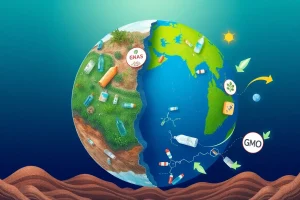
Novel entities are human-made or human-modified substances and organisms introduced into the Earth system that have the potential to cause unwanted geophysical or biological effects. The term was coined within the planetary boundaries framework, a scientific concept that identifies nine critical Earth system processes and defines a safe operating space for humanity. Novel entities represent a boundary that is fundamentally different from others like climate change or biodiversity loss because it deals with the introduction of entirely new elements into the environment—elements that the Earth’s system has not previously encountered and for which it has no natural assimilation mechanisms.
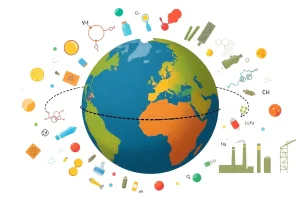
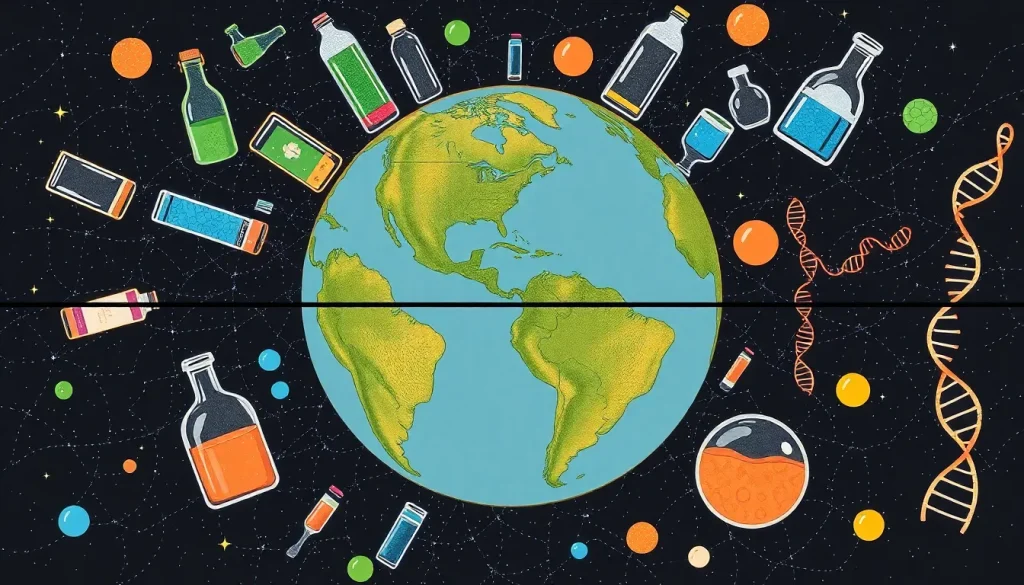
These entities include synthetic chemicals (such as pesticides, industrial compounds, and pharmaceuticals), novel materials (like plastics and nanomaterials), and human-modified organisms (including genetically modified organisms and potentially invasive species). The core concern is that many of these substances are persistent, bioaccumulative, or toxic, and their long-term effects on ecosystems and human health are poorly understood. Because they are novel, the Earth’s regulatory processes—such as dilution, degradation, or sequestration—may be insufficient to neutralize their impacts, leading to global-scale disruptions.
Overview
The concept of novel entities emerged from the planetary boundaries framework, first proposed in 2009 by a team of scientists led by Johan Rockström. The framework identifies nine Earth system processes that regulate the stability and resilience of the planet. These include climate change, biosphere integrity, land-system change, freshwater use, biogeochemical flows, ocean acidification, atmospheric aerosol loading, stratospheric ozone depletion, and novel entities. Each boundary has a quantified safe limit; crossing these limits increases the risk of triggering abrupt or irreversible environmental changes. Novel entities are distinct because they represent a boundary for which no single global threshold exists—instead, the boundary is defined by the rate at which new substances are introduced and the capacity of society to assess and manage their risks.
The planetary boundaries framework has been widely adopted in sustainability science and policy. It provides a holistic view of Earth’s health and highlights the interconnectedness of human activities and environmental stability. The novel entities boundary, in particular, underscores the precautionary principle: in the face of uncertainty about the effects of thousands of chemicals and materials, a cautious approach is warranted to avoid crossing irreversible tipping points.
History
The term “novel entities” was introduced in the 2009 paper “A Safe Operating Space for Humanity” by Rockström et al., where it was initially referred to as “chemical pollution.” The boundary was recognized as critical but remained unquantified due to the complexity of assessing myriad substances. In the 2015 update by Steffen et al., the boundary was renamed “novel entities” to encompass a broader range of human-made introductions, including engineered nanomaterials and microplastics. The authors emphasized that the boundary was not yet quantified but that the precautionary principle should apply.
A major step forward came in 2022 when a study led by Linn Persson and colleagues quantified the novel entities boundary for the first time. The research concluded that the boundary has been breached, meaning that the rate at which novel entities are being introduced into the Earth system far exceeds humanity’s ability to assess and manage the associated risks. The study highlighted plastics and synthetic chemicals as primary drivers of this breach. This quantification solidified the role of novel entities as a core planetary boundary and spurred international policy discussions, including negotiations for a global plastics treaty.
How It Works
The novel entities boundary is assessed using a control variable that differs from other planetary boundaries. Instead of a single measurable threshold (like atmospheric CO₂ concentration for climate change), it uses a two-part approach: the rate of introduction of novel entities and the capacity of society to assess and manage their risks. The boundary is considered breached when the rate of introduction exceeds the capacity for risk assessment and management. This is operationalized through a “planetary boundary tree” that evaluates whether production volumes and release rates of novel entities are within the safe operating space.
The assessment process involves tracking the global production and emission of novel entities, the number of new substances entering commerce, and the extent to which they are monitored and regulated. For example, the chemical industry produces tens of thousands of substances, but only a small fraction have been thoroughly tested for toxicity or environmental fate. The boundary is breached because the speed of innovation and production far outpaces the development of safety data and regulatory frameworks. This mismatch creates a growing reservoir of potentially harmful substances in the environment, with unknown long-term consequences.
Main Causes or Drivers
The primary driver of novel entities is the rapid expansion of the global chemical and materials industry since the mid-20th century. The post-World War II era saw an explosion in synthetic chemistry, leading to the creation of plastics, pesticides, pharmaceuticals, and industrial chemicals. Global chemical production has grown from about 1 million tons in 1930 to hundreds of millions of tons annually in the 21st century. This growth is fueled by consumer demand, agricultural intensification, and industrial processes.
Other key drivers include inadequate regulatory frameworks, which often allow chemicals to enter the market without comprehensive safety testing. The globalized economy enables the widespread distribution of products containing novel entities, while waste management systems struggle to contain them. For instance, plastic waste is often mismanaged, leading to leakage into rivers and oceans. Additionally, the long lag time between exposure and observable harm—sometimes decades—means that problems are only recognized after widespread contamination has occurred.
Environmental and Human Impacts
Novel entities can cause a wide range of environmental and human health impacts. Many synthetic chemicals are persistent organic pollutants (POPs) that resist degradation and accumulate in fatty tissues, leading to biomagnification up the food chain. This can result in toxic effects on wildlife, such as reproductive failure in birds due to DDT or immune system suppression in marine mammals from PCBs. Microplastics have been found in every corner of the globe, from deep-sea sediments to Arctic ice, and are ingested by organisms, potentially causing physical and chemical harm.
Human health is also at risk. Endocrine-disrupting chemicals (EDCs), found in plastics, pesticides, and personal care products, can interfere with hormonal systems and are linked to reproductive disorders, developmental problems, and certain cancers. Exposure to heavy metals like lead and mercury, often released through industrial processes, causes neurological damage. The full extent of impacts is difficult to quantify because of the sheer number of substances and their potential interactions, but the precautionary principle suggests that reducing exposure is prudent.
Examples
Several categories of novel entities illustrate the breadth of the challenge:
- Plastics and microplastics: Over 300 million tons of plastic are produced each year, with a significant portion ending up in the environment. Microplastics result from the breakdown of larger items and are now ubiquitous in water, soil, and air.
- Per- and polyfluoroalkyl substances (PFAS): Known as “forever chemicals,” PFAS are used in non-stick cookware, firefighting foams, and waterproofing. They are extremely persistent and have been linked to cancer and immune system effects.
- Pesticides: Neonicotinoids have been implicated in pollinator declines, while glyphosate is the most widely used herbicide globally, with ongoing debates about its ecological and health effects.
- Pharmaceuticals: Active pharmaceutical ingredients enter waterways through excretion and improper disposal, affecting aquatic life. For example, synthetic estrogens from birth control pills have caused feminization of fish.
- Engineered nanomaterials: Used in electronics, cosmetics, and medicine, their small size allows them to cross biological barriers, but their long-term environmental fate is poorly understood.
Data Limitations and Uncertainties
Assessing the novel entities boundary is fraught with data limitations and uncertainties. Only a small fraction of the estimated 350,000 chemicals and mixtures in global commerce have been adequately tested for safety. For many substances, there is no monitoring data on environmental concentrations or human exposure. The interactions between different novel entities—so-called “cocktail effects”—are largely unknown, making it difficult to predict cumulative impacts.
Furthermore, the planetary boundary framework itself relies on a precautionary approach because the consequences of breaching the boundary may only become apparent after irreversible damage has occurred. The 2022 quantification by Persson et al. used a conservative methodology, yet still concluded the boundary is breached. This highlights the urgent need for improved chemical testing, global monitoring systems, and transparent reporting. The uncertainty does not diminish the risk; rather, it strengthens the case for precautionary action to reduce the introduction of novel entities into the environment.
FAQ
What is a novel entity?
A novel entity is a human-made or human-modified substance or organism introduced into the Earth system that has the potential to cause harmful geophysical or biological effects. Examples include synthetic chemicals, plastics, and genetically modified organisms.
How does the novel entities planetary boundary work?
The boundary is assessed by comparing the rate at which novel entities are introduced into the environment with society's capacity to assess and manage their risks. It is considered breached when the introduction rate exceeds the capacity for risk management, as is currently the case.
Why does the novel entities boundary matter?
It matters because many novel entities are persistent, bioaccumulative, and toxic, with the potential to disrupt ecosystems and human health on a global scale. Breaching this boundary increases the risk of irreversible damage to Earth's life-support systems.
References
- Rockström, J., et al. (2009). A safe operating space for humanity. Nature, 461, 472–475.
- Steffen, W., et al. (2015). Planetary boundaries: Guiding human development on a changing planet. Science, 347(6223), 1259855.
- Persson, L., et al. (2022). Outside the Safe Operating Space of the Planetary Boundary for Novel Entities. Environmental Science & Technology, 56(3), 1510–1521.