In brief
At a glance
Quick Facts
- Atmospheric lifetime
- Approximately 12 years
- Global Warming Potential (20-year)
- 84–87 times that of CO₂
- Global Warming Potential (100-year)
- 28–36 times that of CO₂
- Contribution to warming
- About 0.5°C of observed warming since pre-industrial times
- Main anthropogenic sources
- Agriculture (livestock, rice), fossil fuel production, waste
- Chemical formula
- CH₄
- Removal process
- Oxidation by hydroxyl radicals (OH) in the troposphere
Key Takeaways
- Methane is a potent greenhouse gas, with a warming effect per molecule over 80 times greater than carbon dioxide over a 20-year period.
- Its atmospheric lifetime is relatively short—about 12 years—so its warming impact declines rapidly once emissions are reduced.
- The strong but short-lived nature of methane makes it a critical target for near-term climate action, offering quick benefits for slowing global warming.
- Reducing methane emissions also improves air quality and public health, as methane contributes to the formation of ground-level ozone.
What Is Why Methane Causes Strong but Shorter-Lived Warming?
Methane (CH₄) is a greenhouse gas that causes strong but shorter-lived warming because it absorbs infrared radiation far more effectively than carbon dioxide (CO₂) yet remains in the atmosphere for a much shorter time. This combination means that while methane is extremely potent at trapping heat, its warming influence diminishes relatively quickly once emissions are reduced. Understanding this dual nature is essential for designing effective climate mitigation strategies, as reducing methane emissions can yield rapid benefits for slowing the rate of global warming in the near term.
Methane belongs to a class of pollutants known as short-lived climate pollutants (SLCPs). Unlike CO₂, which can persist in the atmosphere for centuries, methane is removed through chemical reactions, primarily with hydroxyl radicals (OH), within about a decade. This short lifetime, coupled with its high heat-trapping efficiency, gives methane a unique role in the climate system: it drives intense warming over short timescales but does not accumulate indefinitely. As a result, policies that target methane can complement efforts to reduce CO₂, addressing both immediate and long-term climate goals.
How It Works
Methane’s strong warming effect arises from its molecular structure and its ability to absorb infrared radiation. When solar energy reaches Earth’s surface, it is re-radiated as heat. Greenhouse gases in the atmosphere absorb some of this outgoing infrared radiation and re-emit it in all directions, including back toward the surface, warming the planet. Methane is particularly efficient at this process because its four carbon-hydrogen bonds can vibrate in ways that interact with a range of infrared wavelengths, including parts of the spectrum where CO₂ and water vapor are less effective. This means each additional methane molecule added to the atmosphere has a disproportionately large warming impact compared to CO₂. In fact, the radiative forcing per molecule of methane is about 25 times greater than that of CO₂, but because its concentration is much lower, its total contribution is smaller.
However, methane does not remain in the atmosphere indefinitely. It is removed primarily through oxidation by hydroxyl radicals (OH) in the troposphere, forming water vapor and eventually CO₂. The average atmospheric lifetime of methane is about 12 years. This relatively rapid removal means that the concentration of methane responds quickly to changes in emissions: if emissions are reduced, atmospheric levels drop within decades, and the associated warming effect diminishes. In contrast, CO₂ accumulates over centuries to millennia, so its warming effect persists much longer even if emissions are cut. Scientists quantify this difference using the Global Warming Potential (GWP) metric, which compares the heat trapped by a gas over a specific time horizon to that of CO₂. Methane’s GWP over 20 years (GWP20) is 84–87, while over 100 years (GWP100) it is 28–36, reflecting its strong but short-lived influence. The choice of time horizon thus significantly affects how methane’s impact is evaluated in climate policies.
Main Causes or Drivers
Methane emissions come from both natural and human-caused sources. Natural sources include wetlands, where organic matter decomposes in low-oxygen conditions, as well as termites, oceans, and geological seeps. However, human activities now account for roughly 60% of global methane emissions. The largest anthropogenic sources are:
- Agriculture: Enteric fermentation in livestock (especially cattle) produces methane during digestion, and manure management releases additional methane. Rice cultivation in flooded paddies also generates methane as organic material decomposes anaerobically.
- Fossil fuel production and distribution: Methane is the primary component of natural gas. Leaks occur during extraction, processing, and transport of oil and gas. Coal mining also releases methane trapped in coal seams.
- Waste management: Landfills and wastewater treatment facilities produce methane when organic waste breaks down without oxygen.
- Biomass burning: Incomplete combustion of organic matter, such as in wildfires or agricultural burning, releases methane.
These sources have increased atmospheric methane concentrations from about 722 parts per billion (ppb) in pre-industrial times to over 1,900 ppb today, contributing significantly to global warming. The growth in emissions has been particularly rapid since the mid-20th century, driven by expanding agriculture, fossil fuel use, and waste generation.
Importance and Impact
Methane’s strong but short-lived warming makes it a critical lever for near-term climate action. Because its atmospheric lifetime is short, reducing methane emissions can slow the rate of warming within decades, whereas CO₂ reductions take longer to manifest due to the gas’s long persistence. This is particularly important for avoiding tipping points and limiting peak warming. According to the Intergovernmental Panel on Climate Change (IPCC), methane has contributed about 0.5°C to the observed warming since pre-industrial times, making it the second-largest contributor after CO₂. Without methane emissions, the current level of warming would be noticeably lower.
Beyond its direct warming effect, methane also plays a role in forming ground-level ozone, a harmful air pollutant that damages human health, reduces crop yields, and further contributes to warming. Thus, cutting methane emissions yields co-benefits for air quality and food security. The short-lived nature of methane means that aggressive mitigation can rapidly reduce its atmospheric concentration, offering a tangible way to bend the warming curve in the near term while the world transitions to a low-carbon economy. This has led many climate scientists and policymakers to emphasize methane reduction as a complementary strategy to CO₂ cuts, not a substitute.
Environmental and Human Impacts
The environmental impacts of methane extend beyond global warming. As a precursor to tropospheric ozone, methane contributes to the formation of smog, which can cause respiratory illnesses, aggravate asthma, and lead to premature deaths. Ozone also damages vegetation, reducing agricultural productivity and affecting ecosystems. Studies estimate that methane-induced ozone pollution causes hundreds of thousands of premature deaths annually worldwide and significant crop losses. Additionally, methane’s oxidation in the atmosphere produces stratospheric water vapor, which can have a small additional warming effect.
On the human side, communities near oil and gas operations, landfills, or large agricultural facilities may face higher exposure to methane and co-emitted pollutants, such as volatile organic compounds and hazardous air pollutants, raising environmental justice concerns. Reducing methane emissions can therefore improve local air quality and public health, particularly in regions with high emission densities. The rapid response of the climate system to methane cuts means that these health and environmental benefits can be realized relatively quickly, making methane mitigation a win-win strategy for both climate and public health.
Common Misconceptions
One common misconception is that methane is always a more dangerous greenhouse gas than CO₂. While methane is far more potent on a per-molecule basis, its short lifetime means that sustained CO₂ emissions have a much larger long-term impact. Comparing the two requires specifying a time horizon. Another misunderstanding is that methane’s conversion to CO₂ in the atmosphere means it simply becomes another long-lived greenhouse gas. In reality, the CO₂ produced from methane oxidation is part of the natural carbon cycle; for biogenic methane (e.g., from livestock), this carbon was recently removed from the atmosphere by plants, so it does not add new fossil carbon to the system. However, methane from fossil sources does represent a net addition of long-lived CO₂, though the amount is small relative to direct CO₂ emissions from fossil fuel combustion.
Some also believe that because methane is short-lived, it is not a priority for climate policy. On the contrary, its high potency and short lifetime make it an ideal target for rapid climate benefits. Delaying methane action misses an opportunity to reduce near-term warming and its associated impacts. Another misconception is that methane emissions are too difficult to reduce. In fact, many mitigation options are cost-effective and technologically mature, especially in the oil and gas sector where captured methane can be sold as fuel.
Solutions
Reducing methane emissions is technically feasible and often cost-effective. Key strategies include:
- Oil and gas sector: Improved leak detection and repair, upgrading infrastructure, and reducing venting and flaring. Capturing methane for use as fuel can also provide economic returns. Technologies such as infrared cameras and satellite monitoring can identify leaks quickly.
- Agriculture: Changing livestock feed to reduce enteric fermentation (e.g., adding seaweed or other supplements), improving manure management (e.g., anaerobic digesters that capture methane for energy), and altering rice cultivation practices (e.g., alternate wetting and drying, which reduces methane-producing bacteria).
- Waste management: Diverting organic waste from landfills, capturing landfill gas for energy, and treating wastewater in controlled anaerobic systems. Composting and waste-to-energy plants can also reduce methane generation.
- Policy measures: The Global Methane Pledge, signed by over 150 countries, aims to reduce global methane emissions by 30% by 2030 compared to 2020 levels. Regulations, carbon pricing, and incentives can drive adoption of mitigation technologies. International cooperation and funding are essential to support developing countries in implementing these measures.
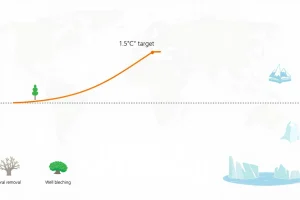
Because methane’s atmospheric response is rapid, these actions can yield measurable reductions in warming within a few decades, providing a critical complement to long-term CO₂ reduction efforts. The Intergovernmental Panel on Climate Change has highlighted that deep methane reductions are necessary to keep warming below 1.5°C or 2°C, alongside net-zero CO₂ emissions.
FAQ
Why is methane considered a stronger greenhouse gas than carbon dioxide?
Methane molecules absorb infrared radiation more effectively than CO₂, and its molecular structure allows it to trap more heat per molecule. However, it breaks down in the atmosphere much faster, so its overall long-term impact is less than CO₂.
How does methane's short lifetime affect its global warming potential?
Because methane only stays in the atmosphere for about 12 years, its warming effect is concentrated in the near term. Over a 20-year period, it is over 80 times more potent than CO₂, but over 100 years, that potency drops to around 28 times, as the methane has largely been removed.
Why is reducing methane emissions important for climate change?
Cutting methane emissions is one of the fastest ways to slow global warming in the short term. Since methane is so potent but short-lived, reducing its emissions can quickly lower its atmospheric concentration and reduce the rate of warming, buying time to address CO₂ emissions.
References
- IPCC, 2021: Climate Change 2021: The Physical Science Basis. Contribution of Working Group I to the Sixth Assessment Report of the Intergovernmental Panel on Climate Change. Cambridge University Press.
- United States Environmental Protection Agency. 'Understanding Global Warming Potentials.' EPA.gov.
- Nisbet, E. G., et al. 'Methane mitigation: methods to reduce emissions, on the path to the Paris Agreement.' Philosophical Transactions of the Royal Society A 379.2210 (2021): 20200451.