In brief
At a glance
Quick Facts
- Definition of Gross Zero
- Complete elimination of all greenhouse gas emissions at the source, with no offsets or removals.
- Definition of Net Zero
- Balancing remaining emissions with an equivalent amount of carbon dioxide removal from the atmosphere.
- Paris Agreement Goal
- Achieve a balance between anthropogenic emissions and removals in the second half of this century, effectively net zero.
- Hard-to-abate Sectors
- Aviation, shipping, steel, cement, and agriculture are often cited as sectors where gross zero is extremely challenging.
- Carbon Removal Methods
- Include afforestation, reforestation, soil carbon sequestration, bioenergy with CCS (BECCS), and direct air capture (DAC).
- Global Net Zero Pledges
- Over 140 countries have set or are considering net zero targets, covering about 90% of global emissions.
- Temperature Threshold
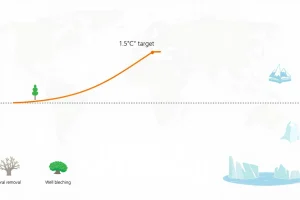
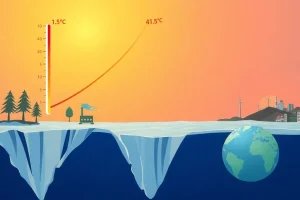
- To limit warming to 1.5°C, global CO2 emissions must reach net zero around 2050, according to the IPCC.
- Offset Integrity Concerns
- Many carbon offsets have been criticized for lacking additionality, permanence, or leading to double-counting.
Key Takeaways
- Gross zero emissions means reducing all greenhouse gas emissions to zero at the source, with no reliance on offsets or removals.
- Net zero emissions allows for some residual emissions as long as they are balanced by an equivalent amount of carbon dioxide removal from the atmosphere.
- Net zero is the dominant target in international climate agreements, but its reliance on future carbon removal technologies introduces significant uncertainty.
- Gross zero is a stricter, more precautionary approach that prioritizes immediate and deep emission cuts across all sectors.
- The choice between gross and net zero has profound implications for climate justice, economic planning, and the feasibility of meeting global temperature goals.
What Is Gross Zero vs Net Zero Emissions?
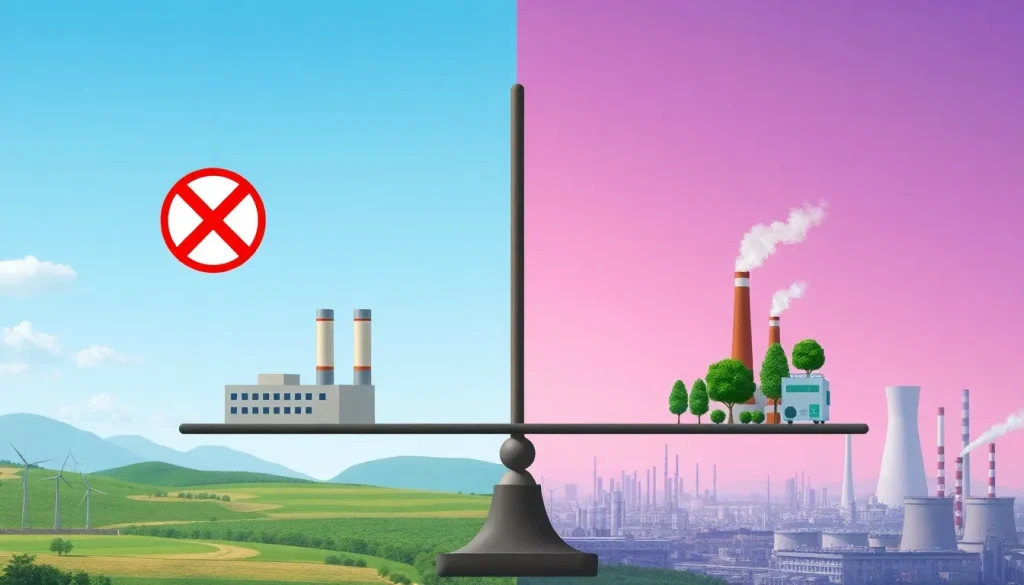
Gross zero and net zero are two distinct concepts used to describe the reduction of greenhouse gas (GHG) emissions to halt human-caused climate change. Gross zero emissions, sometimes called absolute zero, refers to a state in which no GHGs are released into the atmosphere from human activities. This means completely eliminating emissions from energy production, industry, transport, agriculture, and all other sectors without relying on any form of offsetting or carbon dioxide removal (CDR). In contrast, net zero emissions is achieved when the total amount of GHGs emitted is balanced by an equivalent amount removed from the atmosphere, either through natural processes like reforestation or through technological solutions such as direct air capture and carbon storage. Under a net zero framework, some residual emissions are permitted as long as they are fully compensated by removals.
The distinction is not merely semantic; it reflects fundamentally different pathways for decarbonization. Gross zero demands a complete transformation of energy and industrial systems to eliminate fossil fuel use and other emitting activities. Net zero, while still requiring deep emission cuts, allows for a more gradual transition by incorporating carbon sinks and negative emission technologies. This flexibility has made net zero the cornerstone of international climate targets, including the Paris Agreement’s goal to achieve a balance between anthropogenic emissions and removals in the second half of this century. However, the reliance on unproven or limited-scale removal methods raises questions about feasibility, permanence, and moral hazard.
Overview
The concepts of gross zero and net zero emerged from the scientific and policy discourse surrounding climate stabilization. The Intergovernmental Panel on Climate Change (IPCC) has emphasized that limiting global warming to 1.5°C above pre-industrial levels requires reaching net zero carbon dioxide (CO2) emissions globally by around 2050, alongside deep reductions in other greenhouse gases. This framing inherently adopts a net zero perspective, as it acknowledges that some emissions—particularly from sectors like agriculture, aviation, and heavy industry—may be extremely difficult or costly to eliminate entirely. Gross zero, by contrast, is a more absolute target often advocated by environmental groups and some scientists who argue that any continued emissions, even if offset, perpetuate the underlying problem and risk overshooting temperature goals if removal technologies fail.
Both concepts are rooted in the carbon budget approach: there is a finite amount of CO2 that can be emitted before a given temperature threshold is exceeded. Net zero allows the budget to be stretched by subtracting removals, while gross zero treats the budget as a hard limit. The distinction also influences policy design, with net zero targets often incorporating emissions trading, offsets, and negative emission technologies, whereas gross zero targets would require command-and-control regulations or carbon pricing set high enough to phase out all emissions. As of now, most national and corporate climate pledges are framed as net zero, but a growing number of voices call for gross zero in specific sectors or by specific dates to ensure accountability.
How It Works
Achieving gross zero emissions requires a complete cessation of all anthropogenic GHG releases. This would involve transitioning to 100% renewable or nuclear energy for electricity, heating, and cooling; electrifying all transport and industrial processes that currently burn fossil fuels; eliminating emissions from agriculture through changes in land use, livestock management, and fertilizer application; and halting all industrial processes that release CO2 or other GHGs as byproducts. In a gross zero scenario, there is no room for fossil fuel use with carbon capture and storage (CCS), because even with CCS, some emissions typically escape, and the goal is zero emissions at the source.
Net zero, on the other hand, operates on a balance principle. First, emissions are reduced as much as possible through efficiency, renewable energy, electrification, and behavioral changes. For the remaining hard-to-abate emissions, an equivalent amount of CO2 must be removed from the atmosphere. Removals can be nature-based, such as afforestation, reforestation, soil carbon sequestration, and wetland restoration, or technology-based, such as bioenergy with carbon capture and storage (BECCS) and direct air capture (DAC). These removals are then counted as negative emissions to offset the positive emissions. The net zero equation is: Total Emissions – Total Removals = 0. The challenge lies in ensuring that removals are real, permanent, additional, and do not cause unintended social or environmental harm.
Importance and Impact
The distinction between gross and net zero has profound implications for climate policy and the global economy. Net zero targets, now adopted by over 140 countries, provide a flexible framework that can accommodate continued economic growth and the use of fossil fuels in hard-to-decarbonize sectors, provided that equivalent removals are achieved. This flexibility is seen as politically and economically pragmatic, allowing for a more gradual transition and the development of carbon removal industries. However, the net zero concept also carries risks: it may create a moral hazard by allowing governments and corporations to delay deep emission cuts in the hope that future carbon removal technologies will compensate. It also raises issues of intergenerational equity, as the burden of removing past emissions is shifted to future generations.
Gross zero, while more environmentally robust, poses immense technical and social challenges. It would require a rapid and complete phase-out of fossil fuels, which could disrupt economies reliant on oil, gas, and coal. Sectors like aviation, shipping, steel, cement, and agriculture would need transformative technological breakthroughs or significant demand reduction. The impact on employment, energy security, and global equity would be substantial, potentially exacerbating inequalities between developed and developing nations. Despite these challenges, proponents argue that gross zero is the only way to guarantee climate safety and avoid reliance on uncertain negative emission technologies.
Benefits, Limitations and Trade-offs
Net zero offers several benefits: it provides a clear, quantifiable target that aligns with the Paris Agreement; it allows for a managed transition using existing policy tools like carbon pricing and offsets; and it incentivizes the development of carbon removal technologies. However, its limitations are significant. Carbon removal methods, especially technological ones, are currently expensive, energy-intensive, and not yet deployed at scale. Nature-based removals face constraints such as land availability, competition with food production, and vulnerability to climate change itself (e.g., forests burning). There is also a risk of double-counting or fraudulent offsets, undermining the integrity of net zero claims.
Gross zero avoids these offset-related pitfalls and provides a clearer signal for immediate and deep decarbonization. It encourages innovation in zero-emission technologies rather than reliance on unproven removals. The main trade-off is feasibility: gross zero may be unattainable for some sectors in the near term without causing severe economic disruption. A hybrid approach, where gross zero is pursued for most sectors while allowing limited, carefully regulated removals for truly hard-to-abate emissions, is often discussed as a pragmatic pathway. This would require robust standards to ensure that any residual emissions are genuinely unavoidable and that removals are permanent and verifiable.
Examples
Several countries and organizations have set net zero targets, but few have committed to gross zero. The United Kingdom, for instance, has a legally binding target to reach net zero GHG emissions by 2050, with plans to reduce emissions across all sectors and use engineered removals to offset the remainder. The European Union’s climate law similarly aims for net zero by 2050. In the corporate world, hundreds of companies have pledged net zero under the Science Based Targets initiative, though the credibility of these pledges varies widely.
Gross zero commitments are rarer but emerging. Some cities and regions, such as Copenhagen, aim for carbon neutrality without relying on offsets, effectively targeting gross zero for their direct emissions. In the energy sector, a gross zero electricity grid would require 100% renewable or nuclear generation with no fossil fuel backup, a goal that some jurisdictions are approaching through high renewable penetration and energy storage. The concept of “real zero” has also been used by some analysts to describe a gross zero pathway that excludes all forms of carbon offsets and focuses solely on eliminating emissions at the source.
Common Misconceptions
One common misconception is that net zero and carbon neutrality are the same. While related, carbon neutrality typically refers to balancing CO2 emissions alone, often through offsets, and may not cover other GHGs like methane. Net zero encompasses all GHGs and usually implies a more rigorous accounting framework. Another misconception is that achieving net zero means no further global warming; in reality, net zero stabilizes CO2 concentrations, but temperatures may continue to rise slowly for a time due to the delayed response of the climate system and the role of short-lived climate pollutants.
A further misconception is that planting trees alone can achieve net zero. While afforestation and reforestation are important, the land required to offset current emissions through trees alone would be immense, competing with food production and biodiversity. Moreover, carbon stored in trees is not permanent; forests can be lost to fire, disease, or logging. Finally, some believe that net zero allows business-as-usual emissions as long as offsets are purchased. In reality, credible net zero pathways require deep emission reductions first, with removals used only for residual emissions that cannot be eliminated.
Why It Matters
The choice between gross zero and net zero is not just a technical accounting issue; it shapes the ambition, fairness, and effectiveness of climate action. A world that pursues net zero without stringent rules risks locking in fossil fuel infrastructure and delaying the transition, potentially overshooting critical temperature thresholds. Conversely, a rigid insistence on gross zero could stall progress by making the goal seem unattainable. Understanding the difference empowers citizens, policymakers, and businesses to critically evaluate climate pledges and demand transparency about how much of a target relies on actual emission cuts versus future removals.
Ultimately, both concepts share the same destination: a stable climate. The debate centers on the path and the tools used. As the science advances and the impacts of climate change intensify, the distinction between gross and net zero will continue to influence international negotiations, investment decisions, and the legacy we leave for future generations.
FAQ
What is the difference between gross zero and net zero emissions?
Gross zero means no greenhouse gases are emitted at all. Net zero means any emissions that are released are balanced by removing an equivalent amount from the atmosphere, such as through planting trees or using carbon capture technology.
Why do most countries target net zero instead of gross zero?
Net zero is considered more feasible because some sectors, like agriculture and aviation, are very difficult to completely decarbonize. It allows for a gradual transition and the use of carbon removal to offset remaining emissions.
Is net zero enough to stop climate change?
Achieving global net zero CO2 emissions is expected to halt further global warming, but it requires deep and rapid emission cuts first. The reliance on future carbon removal technologies introduces risks, and the sooner emissions are reduced, the less removal is needed.
References
- IPCC, 2018: Global Warming of 1.5°C. An IPCC Special Report on the impacts of global warming of 1.5°C above pre-industrial levels.
- United Nations Framework Convention on Climate Change (UNFCCC) – Paris Agreement, Article 4.
- Science Based Targets initiative (SBTi) – Net-Zero Standard.