In brief
At a glance
Quick Facts
- Definition
- Crop rotation is the practice of planting different crops sequentially on the same plot of land to improve soil health, optimize nutrients, and combat pest and weed pressure.
- Key Principle
- Alternating crops with different root structures, nutrient needs, and pest associations disrupts disease cycles and balances soil fertility.
- Historical Example
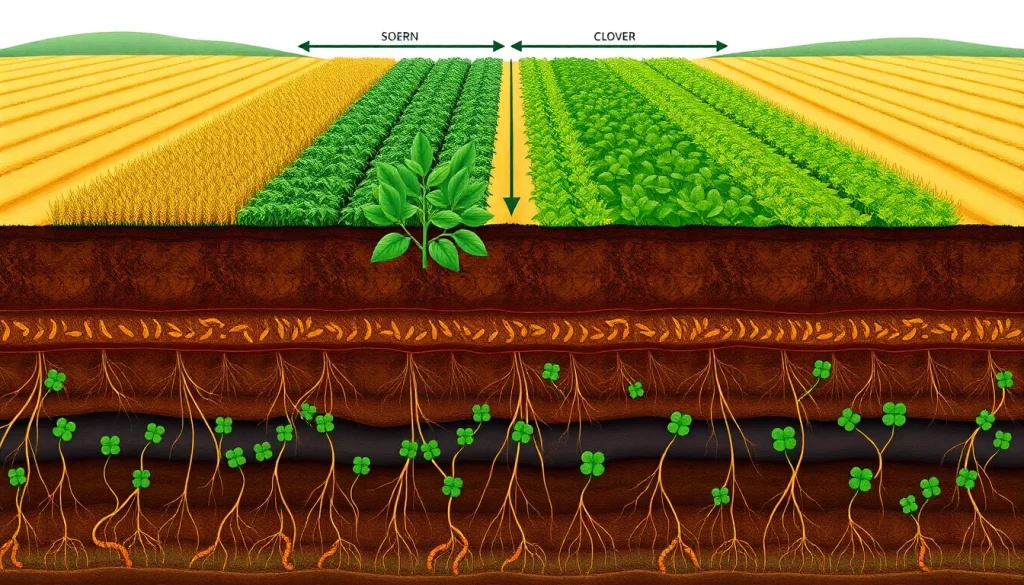
- The Norfolk four-course rotation (wheat, turnips, barley, clover) popularized in 18th-century England revolutionized agricultural productivity.
- Common Rotations
- Typical rotations include corn-soybean, wheat-fallow, and legume-cereal sequences, often incorporating cover crops.
- Soil Benefits
- Rotations with legumes fix atmospheric nitrogen, reducing the need for synthetic fertilizers.
- Pest Management
- Breaking monocultures interrupts the life cycles of crop-specific pests and pathogens, lowering pesticide reliance.
- Economic Impact
- Diversified rotations can increase long-term yields and reduce input costs, though they may require more management.
- Environmental Impact
- Crop rotation reduces soil erosion, improves water infiltration, and enhances biodiversity.
Key Takeaways
- Crop rotation is the planned sequence of different crops on the same land over time, a practice that contrasts with monoculture (growing the same crop year after year).
- It improves soil structure and fertility by varying root depths and nutrient demands, and by incorporating nitrogen-fixing legumes.
- Rotating crops disrupts pest and disease cycles, reducing reliance on chemical pesticides and lowering the risk of resistance.
- This practice enhances long-term agricultural sustainability, supporting stable yields, biodiversity, and climate resilience.
What Is Crop Rotation?
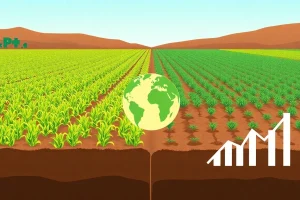
Crop rotation is the agricultural practice of growing different types of crops in a recurring sequence on the same piece of land over multiple seasons or years. Rather than planting the same crop continuously (monoculture), farmers alternate crops with complementary characteristics to maintain soil health, manage pests and diseases, and optimize nutrient use. The sequence is carefully planned based on the biological and chemical needs of each crop, as well as the physical properties of the soil.
This method is a cornerstone of sustainable agriculture and has been used for millennia. It falls under the broader category of agronomic practices that aim to balance productivity with environmental stewardship. By diversifying the crops grown on a field, rotation mimics natural ecosystems, reducing the need for external inputs like synthetic fertilizers and pesticides while promoting long-term soil fertility and farm profitability.
History
Crop rotation has ancient roots. Early farmers in the Near East, Asia, and the Americas observed that continuously growing the same crop depleted the soil and led to lower yields. Simple two-field systems, where one field was planted while the other lay fallow, were among the earliest forms of rotation. The Romans practiced a three-field system, alternating cereals, legumes, and fallow, and documented its benefits in works by Cato and Virgil.
The most famous historical rotation is the Norfolk four-course system, developed in England during the 18th century. It rotated wheat, turnips, barley, and clover over four years. The inclusion of turnips and clover as fodder crops allowed livestock to be integrated, providing manure that further enriched the soil. This system dramatically increased agricultural output and is often credited with fueling the Agricultural Revolution. In the 20th century, the rise of synthetic fertilizers and pesticides led to a decline in complex rotations in favor of monocultures, but modern sustainable agriculture has renewed interest in these time-tested practices.
How It Works
Crop rotation works by leveraging the different biological traits of plant species to create a self-reinforcing cycle of soil improvement and pest suppression. The key mechanisms include:
- Nutrient management: Different crops have varying nutrient requirements. Legumes (e.g., soybeans, clover, alfalfa) fix atmospheric nitrogen into the soil through symbiotic bacteria, reducing the need for nitrogen fertilizers for subsequent crops like corn or wheat, which are heavy nitrogen feeders. Deep-rooted crops can bring up nutrients from lower soil layers, while shallow-rooted crops utilize nutrients near the surface.
- Pest and disease disruption: Many pests and pathogens are host-specific. Rotating to a non-host crop starves them out, breaking their life cycles. For example, rotating corn with soybeans can reduce corn rootworm populations, as the larvae cannot survive on soybean roots.
- Weed suppression: Different crops compete with weeds in different ways. A dense canopy crop like buckwheat can smother weeds, while a cultivated row crop allows mechanical weeding. Alternating between these can reduce weed seed banks.
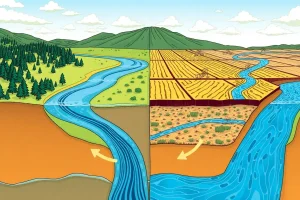
- Soil structure improvement: Crops with fibrous root systems (e.g., cereals) bind soil particles and improve aggregation, while tap-rooted crops (e.g., alfalfa) break up compacted layers, enhancing water infiltration and aeration.
- Organic matter balance: Rotations that include cover crops or crops with high residue (e.g., corn, wheat) add organic matter to the soil, which improves water-holding capacity and microbial activity.
A typical rotation plan might span 3 to 7 years, with the sequence designed to alternate between nitrogen-fixing legumes, high-residue cereals, and root crops, often with a fallow or cover crop period to restore soil health.
Benefits
Crop rotation offers a wide range of agronomic, economic, and environmental benefits:
- Improved soil fertility: Legumes fix atmospheric nitrogen, reducing the need for synthetic fertilizers. Diverse root systems enhance nutrient cycling and organic matter content.
- Pest and disease control: Rotating crops disrupts the life cycles of host-specific pests and pathogens, lowering infestation rates and the need for chemical interventions.
- Weed management: Alternating crop types and associated management practices (tillage, planting dates) helps control weed populations and reduces herbicide resistance.
- Reduced soil erosion: Continuous plant cover and varied root structures protect soil from wind and water erosion, especially when cover crops are included.
- Increased yields: Over the long term, rotations often produce higher and more stable yields compared to monocultures, as soil health is maintained.
- Biodiversity enhancement: Diverse cropping systems support a wider range of beneficial insects, soil microbes, and wildlife.
- Climate resilience: Healthier soils with more organic matter can better withstand droughts and floods, and they sequester carbon, mitigating climate change.
Limitations and Trade-offs
Despite its advantages, crop rotation is not without challenges:
- Complexity and management: Planning and executing a multi-year rotation requires more knowledge, labor, and record-keeping than monoculture. Farmers must understand the specific requirements and market conditions for each crop.
- Market and infrastructure constraints: A farmer may lack access to markets for all crops in the rotation, or may not have the equipment needed to plant and harvest diverse crops. Specialized machinery for one crop can be a barrier.
- Short-term economic trade-offs: Some rotation crops (e.g., cover crops or fallow periods) may not generate immediate income, though they provide long-term benefits. Commodity price fluctuations can make it risky to plant less profitable crops.
- Regional suitability: Not all rotations work everywhere. Climate, soil type, and water availability dictate which crops can be grown, limiting rotation options in some areas.
- Yield variability: In the short term, yields of a particular crop in rotation may be lower than in a high-input monoculture, though the overall system productivity and profitability often improve over time.
Common Misconceptions
Several misunderstandings persist about crop rotation:
- “Crop rotation is just alternating two crops.” While a simple corn-soybean rotation is common, effective rotations often involve three or more crops, including cover crops, to fully realize benefits. A two-crop rotation may not sufficiently break pest cycles or build soil organic matter.
- “It’s an outdated practice replaced by modern chemicals.” Synthetic inputs can supplement but not replace the multifaceted benefits of rotation. Overreliance on chemicals can lead to resistant pests, soil degradation, and pollution, making rotation a key component of integrated pest management and sustainable intensification.
- “Any sequence of different crops is a good rotation.” The sequence must be carefully planned. Planting crops from the same family consecutively (e.g., tomatoes after potatoes) can exacerbate disease problems. A successful rotation considers botanical families, nutrient needs, and root characteristics.
- “Crop rotation eliminates the need for fertilizers and pesticides.” It reduces but rarely eliminates the need for external inputs. Soil tests and integrated management are still necessary to optimize yields sustainably.
Importance and Impact
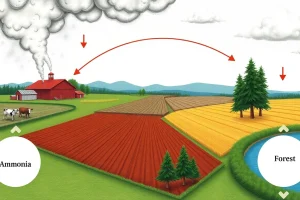
Crop rotation matters because it addresses some of the most pressing challenges in agriculture: soil degradation, biodiversity loss, water pollution, and climate change. By maintaining soil health, it underpins long-term food security. The practice reduces agriculture’s environmental footprint by lowering synthetic input use, curbing greenhouse gas emissions from fertilizer production, and enhancing carbon sequestration in soils.
Economically, rotation can stabilize farm incomes by diversifying products and reducing input costs. It also supports rural livelihoods by creating demand for a wider range of crops and associated processing industries. At a global scale, widespread adoption of diverse rotations could help meet the food demands of a growing population without expanding agricultural land into natural ecosystems, thus protecting forests and wildlife habitats.
FAQ
What is crop rotation?
Crop rotation is the planned sequence of different crops on the same land over multiple seasons or years. It is used to maintain soil fertility, reduce pest and disease problems, and improve overall farm productivity.
How does crop rotation work?
It works by alternating crops with different nutrient needs, root structures, and pest associations. For example, legumes fix nitrogen, deep-rooted crops break up compacted soil, and non-host crops starve pests that rely on a specific plant.
Why does crop rotation matter?
It matters because it sustains soil health, reduces the need for chemical inputs, lowers production costs, and helps farmers adapt to climate variability. It is a key practice for long-term food security and environmental sustainability.
References
- FAO. 'Crop Rotation.' Food and Agriculture Organization of the United Nations.
- USDA Natural Resources Conservation Service. 'Crop Rotation and Soil Health.'
- Bullock, D. G. (1992). Crop rotation. Critical Reviews in Plant Sciences, 11(4), 309-326.