In brief
At a glance
Quick Facts
- Primary natural source
- Precipitation (rain and snow) that infiltrates the ground.
- Global groundwater use
- Provides about 50% of drinking water and 43% of irrigation water.
- Managed recharge methods
- Infiltration basins, injection wells, induced recharge, and rainwater harvesting.
- Key benefit
- Stores water underground, protected from evaporation and contamination.
- Main limitation
- Clogging of infiltration surfaces and potential water quality risks.
- Coastal protection
- Recharge helps prevent saltwater intrusion into freshwater aquifers.
- Land subsidence
- Adequate recharge reduces the risk of ground sinking due to over-pumping.
- Typical source waters
- Stormwater, treated wastewater, and excess surface water from rivers or lakes.
Key Takeaways
- Aquifer recharge is the process of water moving from the land surface or unsaturated zone into an underground aquifer, replenishing groundwater reserves.
- It occurs naturally through precipitation and surface water infiltration, but can be enhanced artificially through managed aquifer recharge (MAR) techniques.
- Recharge is critical for maintaining sustainable groundwater supplies, which provide drinking water for billions and support agriculture, industry, and ecosystems.
- Managed recharge helps counteract over-extraction, mitigate land subsidence, prevent saltwater intrusion, and buffer against climate variability.
What Is Aquifer Recharge Explained?
Aquifer recharge is the hydrologic process by which water moves downward from the land surface or the unsaturated zone into an aquifer, a permeable underground layer of rock, sand, or gravel that holds water. This replenishment can happen naturally as part of the water cycle, or it can be deliberately enhanced through human intervention. In essence, recharge is the primary mechanism that refills groundwater storage, ensuring that aquifers—which supply a significant portion of the world’s freshwater—do not become permanently depleted.
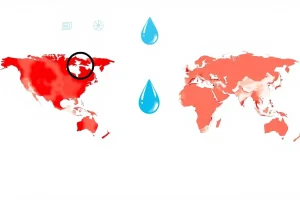
Groundwater is the largest accessible store of liquid freshwater on Earth, and aquifers provide nearly half of all drinking water globally and about 43% of the water used for irrigation. Recharge is therefore a fundamental concept in hydrology and water resource management. Without adequate recharge, groundwater levels decline, leading to dry wells, reduced streamflow, land subsidence, and degraded water quality. Understanding both natural recharge processes and the potential for artificial enhancement is essential for long-term water security.
How It Works
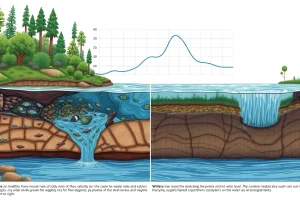
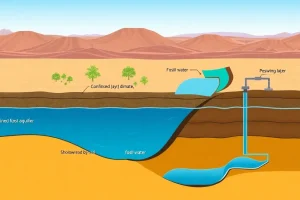
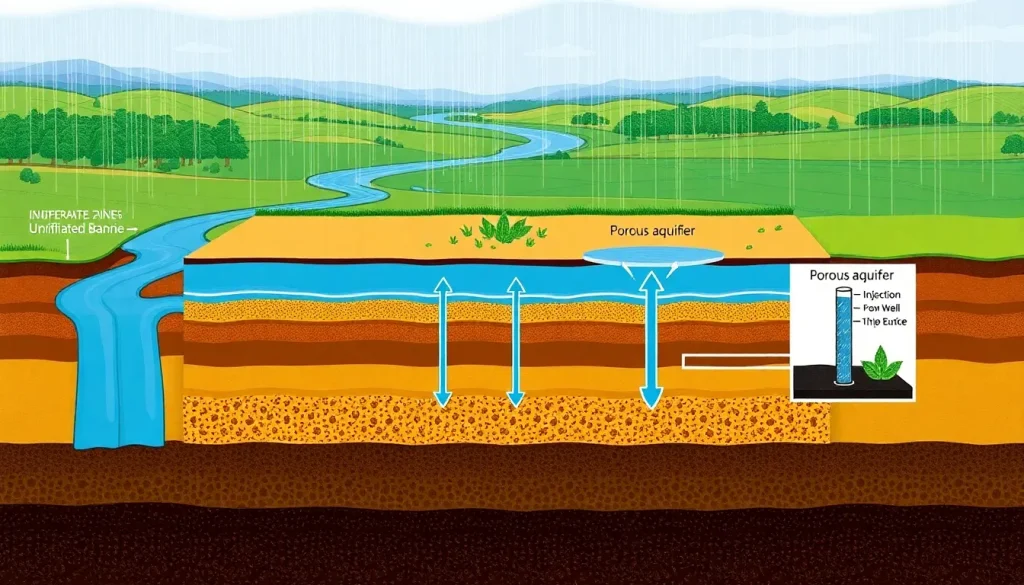
Natural aquifer recharge begins with precipitation—rain or snow—that falls onto the land surface. Some of this water runs off into streams and rivers, some evaporates or is taken up by plants, and the remainder infiltrates into the soil. Once in the soil, water moves downward through the unsaturated zone (vadose zone) under the force of gravity until it reaches the water table, the top of the saturated zone where all pore spaces are filled with water. The rate and amount of recharge depend on several factors:

- Soil and rock permeability: Coarse-grained materials like sand and gravel allow rapid infiltration, while clay and dense rock slow it down.
- Vegetation and land cover: Plant roots can enhance infiltration by creating pathways, but dense vegetation also increases water loss through transpiration.
- Topography: Flat areas tend to have higher recharge than steep slopes where runoff dominates.
- Precipitation intensity and duration: Gentle, prolonged rainfall promotes infiltration; heavy downpours often lead to runoff.
- Depth to water table: A shallow water table allows quicker recharge; a deep unsaturated zone means longer travel times.
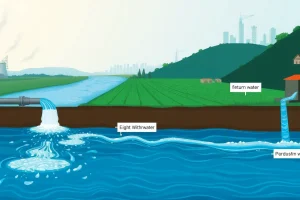
Artificial recharge, often called managed aquifer recharge (MAR), uses engineered systems to intentionally add water to aquifers. Common methods include surface spreading, where water is diverted into infiltration basins or fields and allowed to percolate downward; injection wells, which pump water directly into the aquifer; and induced recharge, where pumping near a surface water body draws water into the aquifer. Source water for MAR can be stormwater, treated wastewater, or excess surface water from rivers and lakes. The choice of method depends on local geology, water availability, and intended use of the stored water.
Importance and Impact
Aquifer recharge is vital for maintaining groundwater levels, which in turn support drinking water supplies, irrigated agriculture, and industrial processes. Globally, groundwater provides about half of all drinking water and 43% of consumptive use in irrigation. In many arid and semi-arid regions, it is the only reliable water source. When extraction exceeds recharge, groundwater mining occurs, leading to declining water tables, increased pumping costs, and eventually the exhaustion of the resource.
Beyond water supply, recharge sustains baseflow in rivers and wetlands, especially during dry periods. It also helps prevent land subsidence—a gradual sinking of the ground surface caused by the compaction of aquifer sediments when water is removed. In coastal areas, adequate recharge maintains the hydraulic pressure that keeps seawater from intruding into freshwater aquifers. Thus, recharge is not only about water quantity but also about preserving water quality and the structural integrity of the land.
Main Causes or Drivers
The primary natural driver of aquifer recharge is precipitation, but its effectiveness is modulated by climate, geology, and land cover. In regions with high rainfall and permeable soils, recharge can be substantial. Conversely, in arid zones, recharge may be negligible. Human activities have become a dominant influence on recharge rates. Groundwater pumping for agriculture, cities, and industry often exceeds natural replenishment, creating a recharge deficit. Urbanization replaces permeable surfaces with impervious ones (roads, buildings), reducing infiltration and increasing runoff, which diminishes natural recharge.
Climate change is altering precipitation patterns, intensifying droughts in some areas and increasing flood frequency in others. These shifts can disrupt historical recharge rates, making groundwater supplies less predictable. The growing recognition of these pressures has driven the expansion of managed aquifer recharge as a tool to restore balance and build resilience against water scarcity.
Benefits, Limitations and Trade-offs
Managed aquifer recharge offers multiple benefits. It stores water underground, where it is protected from evaporation and contamination, and can be recovered during dry periods. The natural filtration that occurs as water percolates through soil and rock can improve water quality by removing pathogens, nutrients, and some chemicals. MAR can also mitigate flooding by capturing excess stormwater and reduce energy consumption compared to surface reservoirs or long-distance water transfers.
However, MAR is not without limitations. Clogging of infiltration surfaces or well screens by fine particles, biological growth, or chemical precipitation can reduce efficiency over time and require maintenance. The quality of source water must be carefully managed to avoid introducing contaminants into the aquifer. Some methods require significant land area or energy for pumping. There are also regulatory and institutional challenges, as water rights and subsurface storage ownership can be complex. Trade-offs include the potential for unintended geochemical reactions that mobilize naturally occurring contaminants like arsenic, and the risk of over-recharge causing waterlogging or slope instability in certain settings.
Examples
Natural recharge processes are visible in many landscapes. The High Plains Aquifer in the central United States receives recharge primarily from precipitation and from ephemeral streams and playa lakes, though rates are low relative to pumping. In contrast, the Edwards Aquifer in Texas is rapidly recharged through fractures and sinkholes in the karst limestone, making it highly responsive to rainfall.
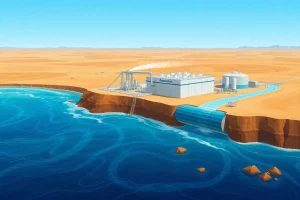
Managed aquifer recharge projects are implemented worldwide. The Orange County Water District in California operates the Groundwater Replenishment System, which treats wastewater to near-distilled quality and injects it into the aquifer to prevent saltwater intrusion and supply drinking water. In Arizona, the Central Arizona Project uses infiltration basins to store Colorado River water underground. India has a long tradition of rainwater harvesting structures, such as check dams and percolation tanks, that enhance recharge in rural areas. In the Netherlands, dune infiltration systems have been used for over a century to purify river water and recharge coastal aquifers. These examples illustrate the diversity of approaches tailored to local conditions.
FAQ
What is aquifer recharge?
Aquifer recharge is the process of water moving from the land surface or unsaturated zone into an underground aquifer, refilling the groundwater supply.
How does managed aquifer recharge work?
Managed aquifer recharge uses techniques like infiltration basins, injection wells, or induced recharge to deliberately add water to aquifers. Source water can be stormwater, treated wastewater, or excess surface water.
Why does aquifer recharge matter?
Recharge is essential for sustaining groundwater levels, which supply drinking water, irrigation, and industrial needs. It also prevents land subsidence, saltwater intrusion, and maintains river baseflow.
References
- United States Geological Survey (USGS) – Groundwater Recharge and Aquifer Basics
- UNESCO – Groundwater Resources and Managed Aquifer Recharge
- Todd, D.K., and Mays, L.W. (2005). Groundwater Hydrology. John Wiley & Sons.