In brief
At a glance
Quick Facts
- Term
- Environmental flow (e-flow)
- Also known as
- Instream flow, ecological flow, reserve flow
- Typical recommendation
- 30–60% of natural mean annual flow for good ecological condition, but varies widely
- Key methods
- Tennant method, Instream Flow Incremental Methodology (IFIM), holistic approaches
- Primary threats
- Dams, water withdrawals, land-use change, climate change
- Global recognition
- Brisbane Declaration (2007) established principles for environmental flows
- Legal status
- Protected in some countries (e.g., Australia, South Africa) but not universally
- Ecological functions supported
- Fish migration, sediment transport, water quality, floodplain connectivity
Key Takeaways
- Environmental flow is the quantity, timing, and quality of water required to sustain freshwater ecosystems and the human livelihoods that depend on them.
- There is no single universal number; the required flow varies by river, season, and ecological objectives, and is often expressed as a percentage of natural flow or a specific hydrograph pattern.
- Maintaining adequate river flows supports biodiversity, water quality, fisheries, recreation, and cultural values, while also reducing the risk of invasive species and algal blooms.
- Human activities such as dams, irrigation withdrawals, and climate change are the primary threats to healthy river flows, but policy tools and flow restoration projects can help balance competing demands.
What Is How Much Water Must Remain in a Healthy River?
The question of how much water must remain in a healthy river is fundamentally about defining the environmental flow—the quantity, timing, and quality of freshwater flows required to sustain aquatic ecosystems and the human livelihoods and well-being that depend on them. In many regions, this concept is also referred to as an “instream flow,” “ecological flow,” or “reserve flow.” It is not a single static number but a dynamic regime that mimics the natural variability of a river, including low flows, high flows, and floods, each of which serves distinct ecological functions.
Determining the necessary water for a river’s health involves understanding the river’s natural flow regime and the ecosystem’s dependence on that regime. A healthy river is one that maintains its ecological integrity—supporting native species, transporting sediment, replenishing groundwater, and providing services like water purification and flood mitigation. When water is diverted for agriculture, industry, or municipal use, the remaining flow must be sufficient to prevent degradation. Thus, the question is not just about a minimum flow, but about a flow regime that sustains the river’s structure and function over time.
Overview
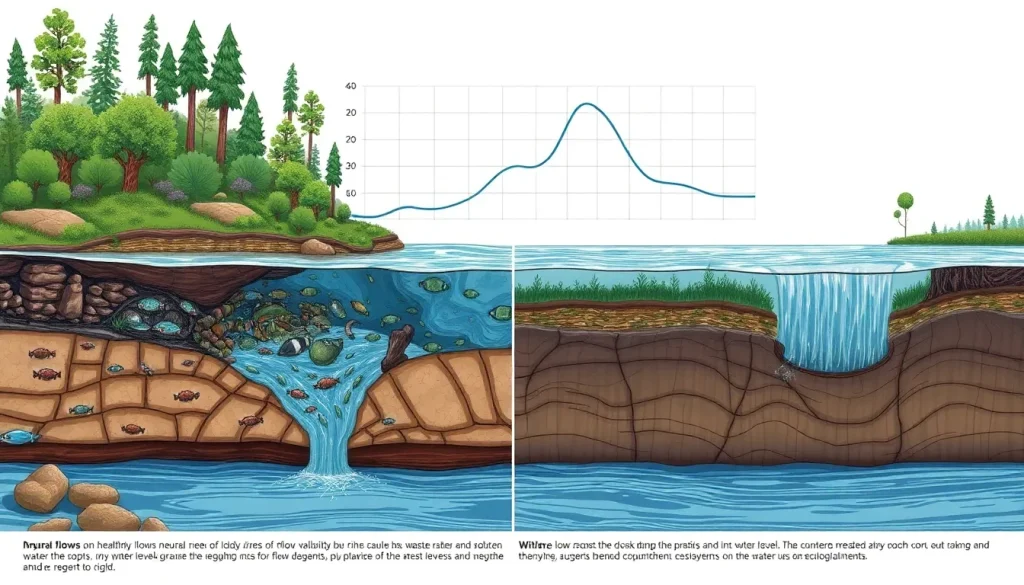
Rivers are dynamic systems shaped by the volume, velocity, and variability of water. The concept of environmental flows emerged from the recognition that traditional water management, which often treated rivers as conduits for human use, led to severe ecological damage. In many basins, rivers were reduced to trickles or dried up completely during certain seasons, causing fish kills, loss of wetlands, and degraded water quality. Environmental flows aim to protect the natural flow regime—the pattern of high and low flows that a river experiences over time—because this variability is critical for ecosystem health. For instance, high flows may trigger fish spawning, flush out sediments, and maintain channel shape, while low flows provide habitat for aquatic insects and allow riparian vegetation to establish.

There is no single answer to how much water must remain; it depends on the river’s size, climate, ecology, and the goals set by society. In some cases, a minimum flow of 10% of the mean annual flow may prevent immediate catastrophic loss, but most scientific guidance suggests that much higher percentages—often 30–60% of natural flow—are needed to maintain good ecological condition. The determination is a multidisciplinary process involving hydrology, biology, geomorphology, and socio-economic considerations.
How It Works
Establishing environmental flows typically follows a structured, science-based process. First, the natural flow regime of the river is characterized using historical streamflow data or models. This includes analyzing the magnitude, frequency, duration, timing, and rate of change of flows. Next, the ecological requirements of key species and habitats are linked to specific flow components. For example, a certain minimum depth may be needed to allow fish passage, while periodic high flows may be necessary to scour spawning gravels or inundate floodplain wetlands.
Several methodologies exist to translate these needs into flow recommendations:
- Hydrological methods use simple rules, such as maintaining a fixed percentage of the mean annual flow (e.g., the Tennant method, which suggests 10% of average flow as a minimum for short-term survival and 30% for good habitat). These are quick but lack ecological specificity.
- Hydraulic rating methods relate flow to habitat availability, such as wetted perimeter or depth, and identify thresholds below which habitat declines rapidly.
- Habitat simulation methods (e.g., Instream Flow Incremental Methodology) model how physical habitat for target species changes with flow, often using detailed channel surveys and species preferences.
- Holistic approaches consider the entire ecosystem and involve expert panels or stakeholder processes to define flow requirements for multiple species and functions, including sediment transport, water quality, and floodplain connectivity.
Once environmental flow recommendations are made, they must be implemented through water allocation policies, dam operating rules, or legal frameworks. Monitoring and adaptive management are essential to ensure the flows achieve their intended ecological outcomes.
Main Causes or Drivers
The need to define and protect environmental flows arises primarily from human activities that alter natural river flows. The most significant drivers include:
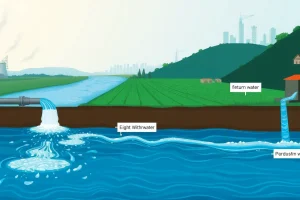
- Water withdrawals for agriculture, industry, and municipal supply directly reduce the volume of water in rivers. Irrigation accounts for roughly 70% of global freshwater withdrawals, often leading to severe flow depletion in arid and semi-arid regions.
- Dams and reservoirs disrupt the natural timing and magnitude of flows. Large dams store water during wet seasons and release it during dry periods, which can eliminate seasonal floods, trap sediment, and alter water temperatures downstream.
- Land-use changes such as deforestation, urbanization, and wetland drainage affect runoff patterns, often increasing peak flows and reducing base flows, which changes the natural flow regime.
- Climate change exacerbates flow alteration by shifting precipitation patterns, increasing evaporation, and intensifying droughts and floods. In many regions, climate change is projected to reduce overall water availability, heightening competition between human uses and environmental needs.
- Interbasin transfers move water from one river basin to another, reducing flows in the source basin and potentially introducing invasive species or altering water chemistry in the receiving basin.
Environmental and Human Impacts
Failure to maintain adequate environmental flows has profound consequences for both ecosystems and human communities. Ecologically, reduced flows can lead to habitat loss, declines in fish populations, loss of wetlands, and increased water temperatures. Low flows concentrate pollutants, leading to algal blooms and oxygen depletion that can kill aquatic life. Altered flow timing can disrupt the life cycles of species that depend on seasonal floods for spawning or migration. Over time, entire riverine food webs may collapse, and some species may face local extinction.
For humans, the impacts are equally severe. Many communities rely on rivers for drinking water, irrigation, fisheries, and recreation. Degraded water quality increases treatment costs and poses health risks. Loss of fisheries affects food security and livelihoods, particularly in developing countries. Reduced river flows can also impair navigation, hydropower generation, and cultural practices tied to rivers. In some cases, flow alteration has led to the disappearance of entire delta systems, such as the Colorado River delta, which once supported rich ecosystems and human settlements. The economic costs of restoring degraded rivers far exceed the costs of maintaining environmental flows.
Regional Differences
The amount of water needed to sustain a healthy river varies significantly across regions due to differences in climate, hydrology, ecology, and water use patterns. In temperate regions with abundant rainfall, environmental flows may be a relatively small fraction of total flow, but the timing of flows is critical—for example, maintaining spring floods to support fish spawning. In arid and semi-arid regions, rivers may naturally experience periods of very low or zero flow, and ecosystems are adapted to these conditions. However, even in these systems, maintaining occasional high flows is essential to reset the ecosystem and recharge groundwater.
Legal and institutional frameworks also differ. In some countries, such as Australia and South Africa, environmental flows are formally recognized in water law, and scientific methods are used to determine water reserves for rivers. In the United States, environmental flows are often protected through a combination of federal and state regulations, such as the Clean Water Act and instream flow water rights. In many developing countries, however, environmental flow protections are weak or absent, and rivers are heavily exploited for irrigation and hydropower without consideration of downstream ecological needs. Transboundary rivers present additional challenges, as upstream and downstream countries may have conflicting water demands.
Solutions
Addressing the challenge of maintaining healthy river flows requires a combination of policy, technology, and community engagement. Key solutions include:
- Legal and regulatory frameworks that establish environmental flow requirements as a priority water right. This can include setting minimum flow standards, reserving a portion of flow for the environment, or requiring dam operators to release water according to an ecological schedule.
- Water allocation reforms that cap total withdrawals, improve irrigation efficiency, and promote water markets that allow water to be leased or purchased for environmental purposes.
- Dam reoperation to release water in patterns that mimic natural flows, such as timed high-flow releases to trigger fish spawning or flush sediments. In some cases, dam removal may be the best option to restore natural flow regimes.
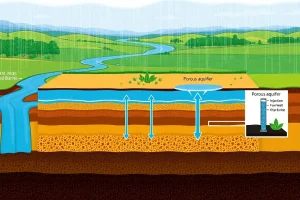
- Green infrastructure and watershed management practices that enhance natural water storage, such as restoring wetlands, recharging aquifers, and reforesting riparian zones, which can help maintain base flows during dry periods.
- Community-based water management that involves local stakeholders in monitoring and decision-making, ensuring that environmental flows are tailored to local ecological and cultural values.
- Climate adaptation strategies that incorporate projected changes in water availability into flow recommendations, using flexible management approaches that can adjust to changing conditions.
Successful implementation often requires collaboration among government agencies, water users, scientists, and indigenous communities. Examples of progress include the restoration of flows in the Murray-Darling Basin in Australia and the release of environmental flows from dams in the western United States.
FAQ
What is an environmental flow?
An environmental flow is the water needed in a river to sustain healthy ecosystems and the services they provide. It includes the quantity, timing, and quality of water required to support fish, plants, water quality, and natural processes.
How is the minimum flow for a river determined?
Scientists use methods ranging from simple hydrological rules (e.g., a percentage of average flow) to complex models that simulate habitat for target species. The process considers ecological needs, natural flow patterns, and stakeholder input.
Why is maintaining river flow important for humans?
Healthy river flows provide clean drinking water, support fisheries and agriculture, enable recreation and tourism, and reduce the risk of floods and droughts. Degraded flows can lead to water shortages, economic losses, and public health issues.
References
- Brisbane Declaration on Environmental Flows (2007), International River Foundation.
- Arthington, A. H. (2012). Environmental Flows: Saving Rivers in the Third Millennium. University of California Press.
- Tennant, D. L. (1976). Instream Flow Regimens for Fish, Wildlife, Recreation and Related Environmental Resources. Fisheries, 1(4), 6-10.