In brief
At a glance
Quick Facts
- Definition
- The quantity, timing, and quality of water flows needed to sustain freshwater ecosystems and human uses.
- Key components
- Base flows, high-flow pulses, floods, and seasonal variability.
- Primary threats
- Dams, water abstraction, land-use change, and climate change.
- Global freshwater species decline
- Populations have fallen by an average of 83% since 1970, partly due to flow alteration.
- Legal frameworks
- South Africa’s National Water Act and the EU Water Framework Directive include environmental flow provisions.
- Ecosystem services supported
- Water purification, flood regulation, fisheries, and nutrient cycling.
Key Takeaways
- Environmental flow is the water regime—quantity, timing, and quality—required to sustain freshwater and estuarine ecosystems and the human communities that rely on them.
- It is not a single minimum flow but a dynamic pattern that mimics natural seasonal and interannual variability to support ecological processes.
- Alteration of environmental flows, primarily through dams, water abstraction, and land-use change, is a leading cause of freshwater biodiversity loss worldwide.
- Implementing environmental flows involves trade-offs among water users but can be achieved through policy, infrastructure modifications, and community-based management.
What Is Environmental Flow?
Environmental flow refers to the amount, timing, and quality of water flows required to sustain freshwater and estuarine ecosystems and the human livelihoods and well-being that depend on these ecosystems. It is a concept rooted in the recognition that rivers, lakes, wetlands, and groundwater systems are not merely conduits for water supply but living systems that need a certain flow regime to maintain their ecological integrity. The term encompasses both the water left in or released into a water body to protect its natural functions and the deliberate management of flows to achieve specific ecological, social, or cultural outcomes.
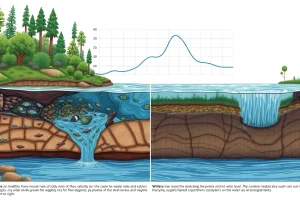
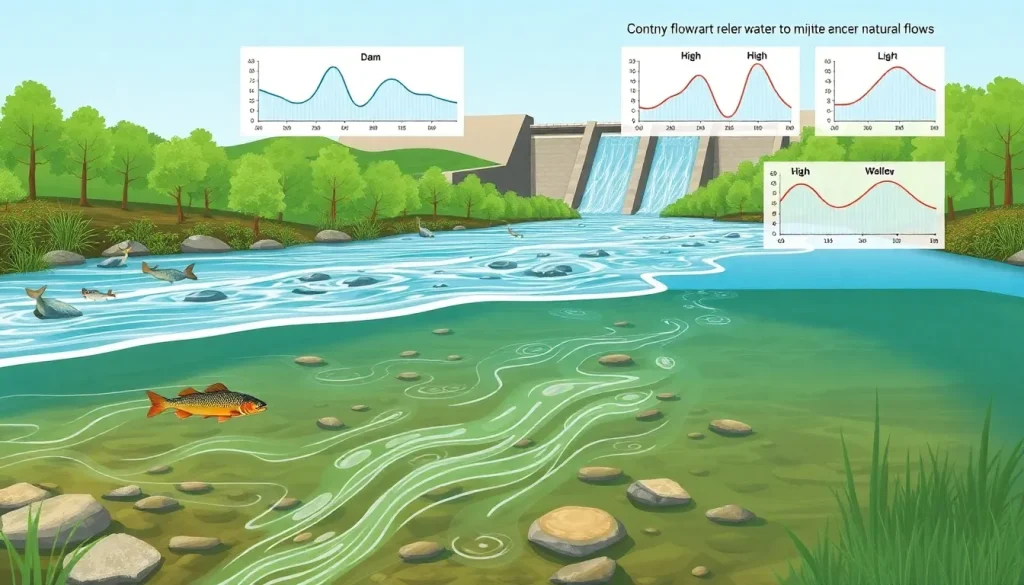
Environmental flow is not a single, static volume of water. Instead, it is a holistic description of a flow regime that includes low flows, high flows, floods, and the natural variability between seasons and years. These different flow components each serve distinct ecological roles: base flows maintain habitat for fish and invertebrates during dry periods, while periodic high flows trigger fish spawning, flush out sediments, and replenish floodplain wetlands. The concept emerged from the earlier idea of “minimum flows” but has evolved to emphasize the full spectrum of flows needed to sustain ecosystem health and resilience over the long term.
How It Works
Environmental flows work by maintaining or restoring key elements of a natural flow regime that have been altered by human activities. The process begins with a scientific assessment of the relationship between flow characteristics and ecosystem responses. Hydrologists and ecologists study historical flow data, channel morphology, water quality, and the life-history requirements of native species to determine which aspects of the flow regime are most critical. This information is used to develop flow recommendations—often expressed as a range of acceptable flows for different times of the year, rather than a single number.

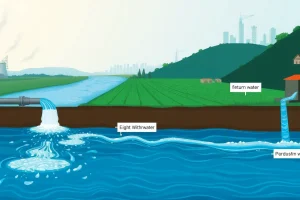
Once the required flow regime is defined, water managers implement it through a combination of operational changes, infrastructure, and policy instruments. For example, dam operators may adjust release schedules to mimic natural flood pulses, irrigation districts may limit withdrawals during low-flow periods, or groundwater pumping may be regulated to maintain base flow in connected streams. In some cases, environmental flows are protected by legal water rights that reserve a portion of the river’s flow for the ecosystem. Monitoring is essential to verify that the implemented flows achieve the desired ecological outcomes and to adapt management as conditions change.
Importance and Impact
Environmental flows are critical for preserving the health and resilience of freshwater ecosystems, which are among the most threatened on Earth. Rivers, lakes, and wetlands provide essential services such as water purification, flood regulation, nutrient cycling, and habitat for countless species. When flows are altered—by damming, diversion, or over-extraction—these services degrade. Fish populations decline, wetlands dry out, invasive species proliferate, and water quality deteriorates. Environmental flows help prevent these outcomes by sustaining the physical, chemical, and biological processes that underpin ecosystem function.
The impact of environmental flows extends beyond ecology to human well-being. Many communities depend on healthy rivers for drinking water, irrigation, fisheries, recreation, and cultural practices. Inadequate flows can lead to conflicts between upstream and downstream users, loss of livelihoods, and increased costs for water treatment. Conversely, well-designed environmental flow programs can enhance water security, support sustainable agriculture, and protect the cultural and spiritual values tied to rivers. The concept thus bridges conservation and development, recognizing that human prosperity is intertwined with the health of aquatic systems.
Main Causes or Drivers
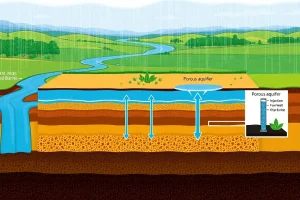
The primary driver of altered environmental flows is the modification of natural flow regimes by human activities. The construction of dams and reservoirs for hydropower, irrigation, and water supply is the most widespread cause, as it changes the timing, magnitude, and frequency of flows downstream. Water abstraction for agriculture, industry, and municipal use directly reduces the volume of water remaining in rivers and aquifers. Land-use changes, such as deforestation, urbanization, and drainage of wetlands, also affect flow patterns by altering infiltration, runoff, and groundwater recharge.
Climate change acts as an additional stressor, intensifying the impacts of flow alteration. Shifts in precipitation patterns, increased evaporation, and more frequent droughts reduce available water, while extreme rainfall events can cause damaging floods. These changes make it harder to maintain environmental flows and increase competition for water among users. In many regions, the combined effect of human modifications and climate change has pushed aquatic ecosystems beyond their natural resilience, making the implementation of environmental flows an urgent priority.
Environmental and Human Impacts
When environmental flows are not maintained, the consequences cascade through both natural and human systems. Ecologically, reduced flows can lead to loss of habitat for fish and other aquatic species, disruption of migration and spawning cues, and increased water temperatures and pollutant concentrations. Wetlands may shrink or disappear, eliminating critical nursery areas and natural water filters. Altered flow regimes also favor invasive species that are better adapted to stable or low-flow conditions, further displacing native biodiversity.
For human communities, the impacts include reduced availability of clean water, declining fisheries, and increased vulnerability to water-related disasters. In many regions, the loss of floodplain connectivity due to flow alteration has diminished natural flood storage, making downstream areas more prone to inundation. Cultural and recreational values tied to free-flowing rivers are eroded. Conversely, restoring environmental flows can reverse some of these trends, improving water quality, reviving fisheries, and enhancing the resilience of both ecosystems and communities to climate variability.
Examples
One well-documented example of environmental flow implementation is the restoration of the Snowy River in Australia. After decades of reduced flows due to a large hydroelectric scheme, an agreement was reached to release a portion of the river’s natural flow from the dam. The environmental flow program includes high-flow releases to flush sediment and maintain channel form, as well as base flows to support aquatic life. Monitoring has shown improvements in water quality, macroinvertebrate communities, and fish populations, though full recovery remains a long-term goal.
In South Africa, the National Water Act of 1998 legally established the “Reserve,” which includes an ecological component that guarantees a basic amount of water for ecosystem functioning before other uses are licensed. This pioneering policy has been applied in several river systems, such as the Olifants River, where environmental flow requirements are integrated into water allocation decisions. In the United States, the Sustainable Rivers Program—a collaboration between the U.S. Army Corps of Engineers and The Nature Conservancy—has modified dam operations on rivers like the Green River in Kentucky to release environmental flows that benefit endangered mussels and fish while still meeting flood control and hydropower needs.
Solutions
Addressing the challenge of environmental flows requires a combination of policy, technology, and stakeholder engagement. One key solution is the legal recognition of environmental water rights, which reserve a portion of the flow for ecosystem needs. This can be achieved through legislation, water allocation reforms, or the establishment of water trusts that acquire water rights for environmental purposes. In many basins, water markets allow for the temporary or permanent transfer of water to environmental uses, providing flexibility and compensating users.
Infrastructure modifications also play a role. Dam reoperation—adjusting release schedules to better mimic natural flow patterns—can significantly improve downstream conditions without requiring dam removal. Fish passages, sediment bypass systems, and multi-level outlet structures help mitigate the ecological impacts of existing dams. At the catchment scale, green infrastructure such as wetland restoration, reforestation, and sustainable urban drainage can enhance natural flow regulation and reduce the demand for engineered solutions. Ultimately, successful environmental flow programs depend on inclusive governance that brings together water users, scientists, and policymakers to negotiate trade-offs and share benefits.
FAQ
What is environmental flow?
Environmental flow is the water regime—amount, timing, and quality—required to sustain freshwater and estuarine ecosystems and the human communities that depend on them.
How is environmental flow determined?
Scientists assess historical flow data, ecological needs of species, and channel morphology to define a range of flows that mimic natural variability. Methods range from simple hydrological rules to complex ecosystem models.
Why does environmental flow matter?
It matters because rivers and wetlands provide essential services like clean water, fisheries, and flood control. Without adequate flows, these ecosystems degrade, leading to biodiversity loss and negative impacts on human well-being.
References
- Brisbane Declaration on Environmental Flows (2007)
- Arthington, A. H. (2012). Environmental Flows: Saving Rivers in the Third Millennium. University of California Press.
- World Wide Fund for Nature (WWF) – Environmental Flows publications